A Lord Shiva painting brings a different energy into a home than most other deity art. Shiva represents transformation, stillness, and the destruction of what no longer serves you. As a result, families often choose Shiva art for meditation corners, home offices, and quiet reading rooms, not just the pooja room.
This guide covers the most common Shiva imagery and what it means, where Vastu recommends placing it, and which style suits your home.
What Different Shiva Paintings Represent
In general, Shiva appears in many forms, and each one carries a different meaning. Understanding them helps you choose the right painting for your intention.
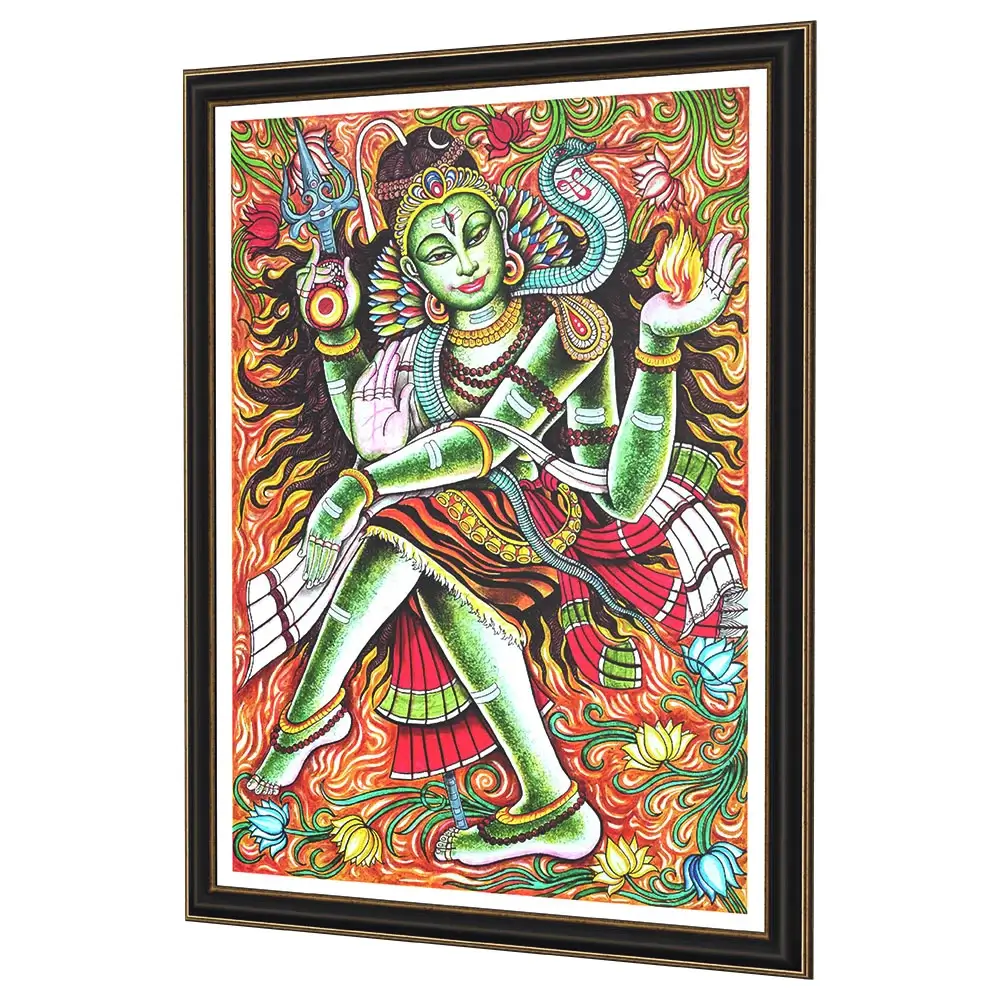
- Nataraja (the cosmic dancer): represents the cycle of creation and destruction. It suits a study, an office, or any space linked to ambition and change.
- Meditating Shiva: represents stillness and inner peace. This form suits a meditation corner, a reading nook, or a quiet bedroom wall.
- Ardhanarishvara (half-Shiva, half-Parvati): represents balance between masculine and feminine energy. Couples often choose this form for the living room or bedroom.
- Shiva family (with Parvati and Ganesha): represents domestic harmony. This works well in a family living room.
Vastu Placement for a Shiva Painting
Vastu recommends the north-east corner for most Shiva art, since this direction represents spirituality and clarity. A meditating Shiva, in particular, suits this corner well, since it reinforces stillness in the most sacred zone of the home.
For a Nataraja painting, however, the study or office wall works better than the pooja room. This is because the dancing form carries active, transformative energy, which suits ambition and career growth rather than quiet worship.
Avoid the bedroom for most Shiva imagery, except for Ardhanarishvara, which represents balance rather than austerity. Also avoid placing Shiva art directly opposite the main entrance, since Vastu prefers this deity in a quieter, more contemplative spot.
Choosing a Style That Fits Your Space

Typically, a mural-style Shiva painting, rich in gold and deep colour, suits traditional homes and pooja rooms best. For a modern apartment, however, a minimal or monochrome Shiva – often just the outline of the trident and crescent moon – fits better, since it keeps the spiritual meaning without a heavy, ornate look.
If you want a piece that fits a family living room, consider a painting that includes Parvati and Ganesha alongside Shiva. This softens the intensity of the imagery, and it reads as a symbol of family unity rather than pure austerity.
Why Choose an Original Painting
Shiva imagery relies heavily on fine detail – the matted hair, the trident, the crescent moon, the flowing Ganga. An original handmade painting captures this detail with real texture and brushwork, something a mass-produced print cannot match. In fact, every original in our collection is hand-painted and signed by the artist. Browse the full Lord Shiva painting collection, or compare originals and prints in our canvas vs acrylic print guide.
Frequently Asked Questions
Where should I hang a Lord Shiva painting at home?
The north-east corner suits most Shiva art, especially a meditating form. A Nataraja painting works well in a study or office instead, since it carries more active, transformative energy.
Can I keep a Shiva painting in the bedroom?
In general, most Shiva imagery does not suit the bedroom. Ardhanarishvara, the half-Shiva, half-Parvati form, is the exception, since it represents balance rather than austerity.
What does the Nataraja form of Shiva mean?
Essentially, Nataraja represents Shiva as the cosmic dancer, balancing creation and destruction. It suits a study, office, or any space connected to growth and ambition.
Find Your Shiva Painting
A Lord Shiva painting for home brings stillness, transformation, or balance, depending on the form you choose. So pick the imagery that matches your intention, place it thoughtfully, and let it anchor the room.