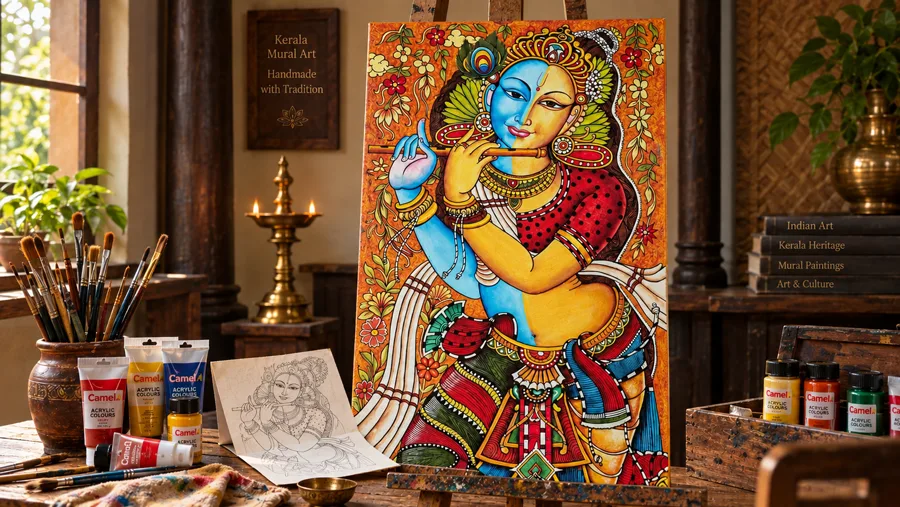
The dining room gets overlooked more than almost any other room in the house. It’s not where people relax alone. Guests don’t spend their whole evening there. It lacks the obvious “anchor” furniture piece, like a sofa or bed, that signals what art belongs there. Yet it’s one of the most socially important rooms you have. Meals happen there. Conversations happen there. Guests sit still long enough to notice what’s on the walls around them.
That combination, high social visibility and low decorating attention, is exactly why the dining room is worth getting right. Here’s how to choose wall art that actually earns its place at the table.
Why Dining Room Art Is Different From Every Other Room
Dining room art is different from art in other spaces. Unlike a living room, where people move around, dining room viewers sit in fixed positions. They often view the art for an hour or more at a stretch. Multiple people see it at once. That changes the calculation. A painting here needs to hold up under sustained, close attention rather than just making a strong first impression from across the room.
A dining room’s lighting also shifts more dramatically across the day than almost any other room. Bright and clear at breakfast. Dim and warm at dinner. A painting that looks good under both conditions serves the room better than one that only comes alive under specific light. That could be a showroom or a single evening viewing.
A dining room is built around conversation. That means dining room art has an unusual secondary job. It gives people something to talk about. A painting with genuine detail or an interesting story outperforms something purely decorative in this specific room. It doubles as a natural conversation starter during meals.
Matching the Mood to How You Use the Room
Think about how your dining room actually gets used before choosing a mood. A room used mainly for quick weekday breakfasts and everyday family meals benefits from something warm and unfussy. Choose a golden landscape, a lively bird or floral piece, something with energy but not intensity. A dining room reserved for dinner parties and more formal entertaining can support something bolder and more sophisticated. Think of a striking peacock, a rich abstract piece, or a dramatic monochrome portrait. If your dining room does both jobs at different times of the week, lean toward a piece flexible enough to suit either mood rather than picking an extreme in either direction.
Color and Appetite: A Real Consideration
Many restaurants lean on warm reds, oranges, and golds in their dining spaces for a reason. Warm tones encourage appetite and sociability. Cool blues and greys, though calming, sometimes suppress appetite in design and hospitality circles. This doesn’t mean you must avoid cooler palettes entirely. But if your dining room already leans cool in its furniture and walls, a warmer-toned painting brings back that inviting, gathering-around-the-table energy. A fully cool-toned room can sometimes lack this warmth.
Styles That Work Especially Well
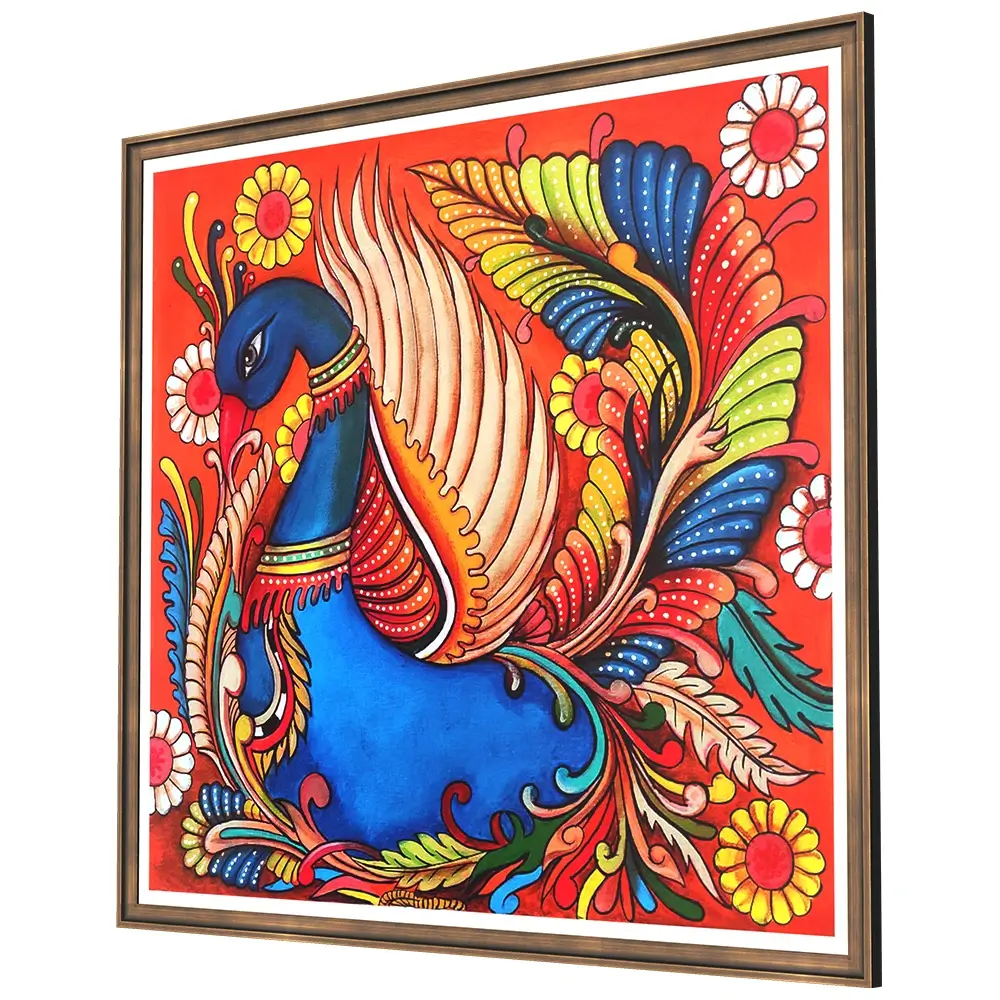
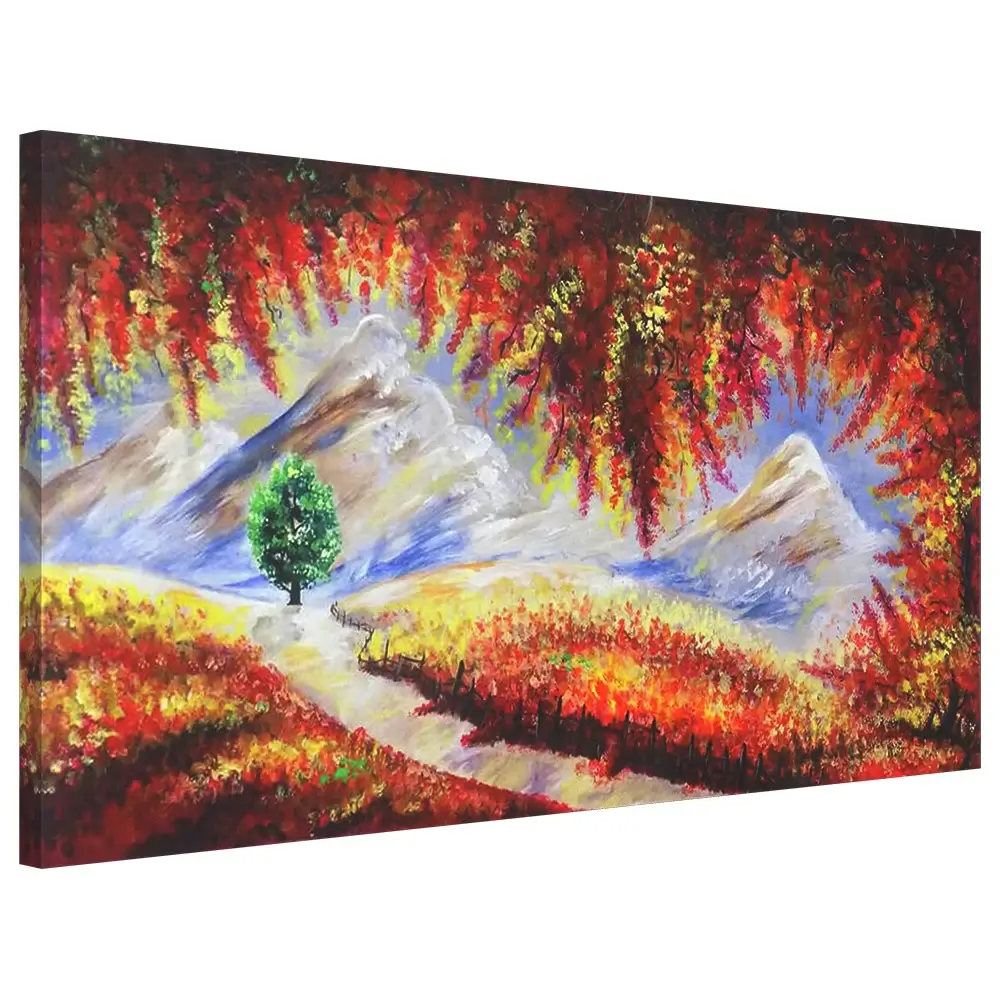
Floral and botanical paintings have a natural association with dining spaces. They echo the idea of a table set with fresh flowers even when there isn’t a vase in sight. Bird paintings, particularly peacocks and other richly detailed species, bring color and elegance without feeling overly formal. Warm, golden-hour landscapes suit dining rooms that double as gathering spaces for extended family. Bold abstract pieces work surprisingly well too. A dining room is one of the few rooms where a slightly more daring, conversation-starting choice genuinely fits the room’s social purpose.
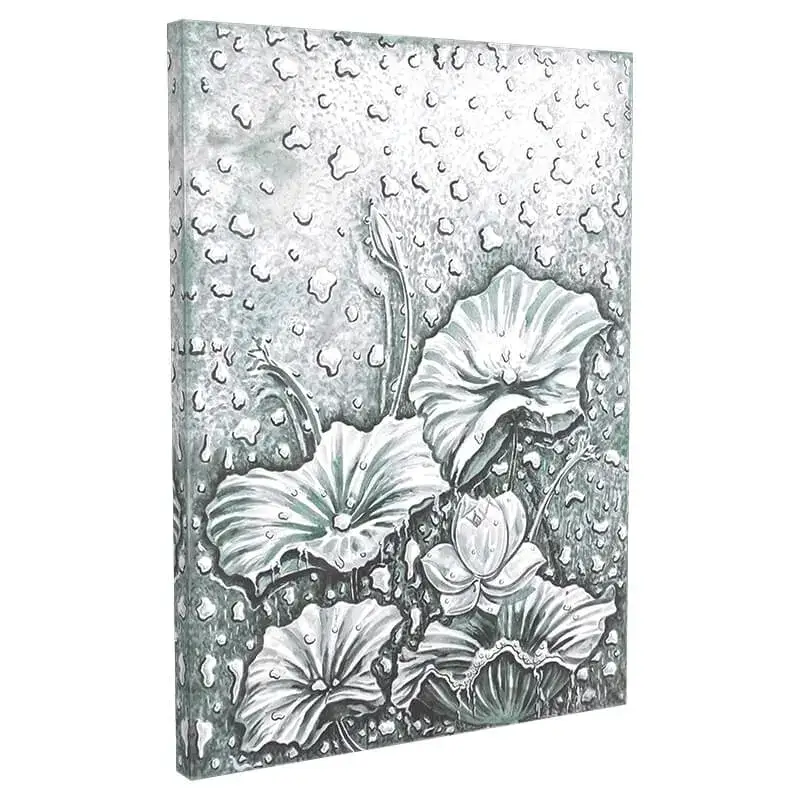
The raised, textured surface of a relief painting rewards the close, seated viewing a dining room naturally provides. Something flatter would lose most of that detail from across a living room.
Sizing a Painting for a Dining Room Wall
Dining rooms often have one clear “main wall.” This is typically opposite or beside the table. A sideboard or buffet wall offers a second, smaller opportunity for art. For the main wall, aim for a painting that spans roughly 60-75% of the table width or the furniture beneath it. This mirrors the sizing rule used for a sofa. Above a sideboard or buffet, size to the furniture piece itself rather than the whole wall. Leave 15-20cm between the top of the furniture and the bottom of the frame.
One Large Piece, a Pair, or a Series
A single large statement painting works well as the room’s clear focal point, especially in a dining room used for entertaining. A pair of matching or complementary pieces flanking a sideboard or window creates a more formal, symmetrical feel. This suits classic and traditional dining rooms particularly well. A series of three or more smaller, related paintings running along a longer wall introduces rhythm and movement. This works nicely in a longer, narrower dining space where a single piece might feel lost.
Lighting Your Dining Room Art
Dining rooms often feature a strong lighting fixture in the form of a pendant or chandelier over the table. Think about how that light interacts with nearby art rather than treating the two as unrelated. A painting positioned to catch some ambient glow from the dining light tends to look richer in the evening. This avoids direct glare bouncing off the canvas. For a piece on a separate wall away from the main fixture, a small picture light or warm-toned wall sconce brings out texture and color far better than relying on the main overhead light alone.
Dining Room Art Across Design Styles
A traditional dining room, dark wood furniture, formal table settings, suits classic subjects. Think of rich florals, elegant birds, warm landscapes with a sense of history. A modern or contemporary dining room, clean lines, minimal ornamentation, pairs better with bold abstract work or a single striking monochrome piece. The room’s simplicity gives a bolder painting room to stand out without competing decor. A rustic or farmhouse-style dining room suits warmer, textured, nature-inspired pieces. Consider forest scenes, warm-toned abstracts, anything that echoes the room’s organic materials like raw wood and natural fiber. An eclectic dining room, mixing eras and styles, can take the most creative risks. The room’s whole identity is built around thoughtful contrast rather than uniformity.
Framing Choices for a Dining Room
Frame choice matters more in a dining room than in most other rooms. You view it up close so often. A dark wood or black frame lends formality and suits a more traditional or evening-entertaining dining room. A natural light wood frame feels warmer and more casual. This suits a family-style dining space used for everyday meals. Gallery-wrapped canvases without a frame at all bring a clean, contemporary look. They pair well with modern dining furniture, letting the painting’s own edges become part of the composition rather than being boxed in.
Seasonal and Occasion Styling
Some households rotate dining room art seasonally, or swap accessories around a fixed painting to mark holidays and gatherings. If you like this kind of flexibility, choose a fairly neutral, timeless main painting. A calm landscape or a classic floral piece gives you the most freedom. Layer seasonal touches, table runners, centerpieces, candles, around it without ever needing to change the art itself. For households that prefer one dining room to simply always look considered without seasonal fuss, a bolder, more specific piece can serve as a permanent, unchanging centerpiece instead.
Dining Room Art for Hosting Guests
If entertaining is a regular part of how you use your dining room, think about the painting from a host’s perspective, not just your own daily experience. A piece with some genuine story or detail behind it sparks conversation. Where was it made? What does it depict? Why did you choose it? This gives you something effortless to talk about if conversation lulls during a dinner party. This is one of the few practical, functional reasons to choose original art specifically for a dining room. A hand-painted piece almost always has more of a story to tell than a mass-produced print. Guests tend to notice and appreciate that difference, even if they can’t quite articulate why.
Common Mistakes to Avoid
The most common mistake is choosing art that only looks good from a distance. It falls apart under close inspection. Dining room art is viewed up close and for extended periods. The second mistake is ignoring how the painting interacts with food and appetite. Don’t hang something with cool, clinical tones or an unsettling subject directly facing the table. The third is undersizing. A small painting on a large dining room wall reads as an afterthought. This is especially noticeable in a room that otherwise gets relatively little decorating attention. The fourth is forgetting the glare from the dining light fixture. Bright pendants can wash out a painting hung directly beneath or too close to them.
Choosing Art for an Open-Plan Dining Space
Many modern homes combine the dining room with the kitchen or living area in one open-plan space. This changes the art decision slightly. The painting needs to feel connected to the wider room rather than isolated in its own dining “zone.” Choose a piece that shares a color or tone with something in the adjacent kitchen or living area. A matching accent color or similar warmth helps the dining art feel like part of one continuous, considered space. Without this connection, it reads as a decorating decision made in isolation.
Original vs Print in a Dining Room
Dining room art gets viewed up close more than almost any other room’s art. The difference between an original and a print shows up more clearly here than almost anywhere else in the house. The texture of real brushwork is visible. The subtle variation in a hand-mixed color shows through. The slight unevenness that comes from a human hand rather than a printer stands out. All of this becomes genuinely noticeable when someone sits three feet away during dinner. If there’s one room where investing in an original over a print makes a noticeable difference, the dining room is a strong candidate.
Caring for Dining Room Art
Dining rooms come with a specific hazard most other rooms don’t. Cooking smoke and food odors accumulate there, especially in open-plan or kitchen-adjacent spaces. Over time, airborne grease and smoke particles settle on a canvas surface. This dulls colors gradually and almost imperceptibly. Dust the painting regularly with a soft, dry cloth. If your dining area is close to an active kitchen, position art on the wall furthest from the stove. Ensure good ventilation during cooking. Avoid direct sunlight through nearby windows for extended periods. Never use kitchen cleaning sprays anywhere near a painted canvas surface.
A Quick Buying Checklist
- Decide whether the room is mainly casual, formal, or both, and choose the mood accordingly
- Lean toward warmer tones if the room already feels cool, to support appetite and sociability
- Choose a piece with enough detail to reward close, seated viewing over a full meal
- Size to roughly 60-75% of the table or sideboard width, depending on placement
- Consider how the piece interacts with your existing dining light fixture
- If the dining room is open-plan, choose a piece that ties tonally to the adjacent space
Frequently Asked Questions
What’s the best type of painting for a small dining room?
A single, well-sized piece works better in a small dining room than multiple smaller ones. It avoids visual clutter in a space that’s already compact. A lighter, less visually heavy subject also helps the room feel more open.
Should dining room art match the tablecloth or dinnerware?
It doesn’t need to match exactly. But pulling one color from the painting into table linens or a centerpiece occasionally creates a nice, cohesive touch for special occasions. This doesn’t require a permanent color match.
Is it okay to hang a portrait in a dining room?
Yes, particularly a warm, welcoming portrait rather than a stern or formal one. Family or ancestral portraits have a long tradition in dining rooms specifically. They tie into the room’s role as a gathering space.
Can I use the same painting style in my dining room and kitchen?
Yes, especially if the two spaces are open-plan or visible from one another. Keeping a consistent style or palette across both areas helps the whole space feel unified. It avoids feeling like two separately decorated rooms.
What should I avoid hanging in a dining room?
Avoid unsettling, intense, or visually chaotic subjects directly facing the table. These work against the relaxed, social mood a dining room is meant to have during meals.
The Takeaway
The dining room deserves more decorating attention than it usually gets. It’s one of the few rooms where art gets viewed closely, for a long time, by multiple people at once. Choose a piece with enough warmth and detail to hold up under that kind of attention. Size it generously. Let it do the quiet work of making every meal feel a little more considered.
Browse our full collection of original hand-painted artwork, created on canvas by our artists in India, to find a piece suited to your dining space.