
Few images feel as instantly welcoming in an Indian home as a Ganesha painting. It might hang beside the front door, above the pooja shelf, or as a bold statement piece in the living room. Either way, Lord Ganesha brings a sense of calm, good fortune, and new beginnings to the space around him. In fact, with Ganesh Chaturthi 2026 falling on 15 September, many families are now searching for the perfect Ganesha painting for home. Often, they ask the same practical questions: Which wall? Which direction? Which style? What size?
This guide answers all of them. First, we cover Vastu placement and direction. Next, you’ll learn what the trunk, posture, and colours traditionally mean. Then we cover the most popular painting styles, a room-by-room size guide, and how to care for an original acrylic artwork so it stays beautiful for decades. Along the way, you’ll see real examples from our own studio, where our artists hand-paint every Ganesha painting on canvas in India.
Why a Ganesha Painting Belongs in Every Home
Hindus know Ganesha as Vighnaharta, the remover of obstacles, and Buddhi Pradaayaka, the giver of wisdom. Traditionally, families worship him first before any new venture – a housewarming, a wedding, a new business, an exam. That is why a Ganesha painting ranks among the most common housewarming gifts in India. In fact, it is often the first artwork a family hangs in a new home.
Beyond devotion, however, a Ganesha painting simply works as art. The elephant head, the rounded belly, the single tusk, and the tiny mouse at his feet give artists an endlessly flexible subject. For example, a Kerala mural-style Ganesha in gold and ochre suits a traditional home. Meanwhile, an abstract Ganesha in rainbow strokes lifts a modern apartment. A realistic Ganesha in a cave setting, on the other hand, becomes a dramatic focal point in a large living room. Every form, however, still carries the same symbolism. For example, a big head stands for big thinking. Similarly, large ears mean listening well. A small mouth suggests speaking less, and a broken tusk represents sacrifice.
Ganesha Painting Vastu: Which Direction and Which Wall?
Vastu Shastra is a traditional Indian system of spatial design. It offers guidance on where to hang a Ganesha painting, and that guidance stays remarkably consistent across sources. Below, you’ll find the placements most Vastu practitioners recommend.
Recommended directions and walls
| Location | Vastu guidance | Why |
|---|---|---|
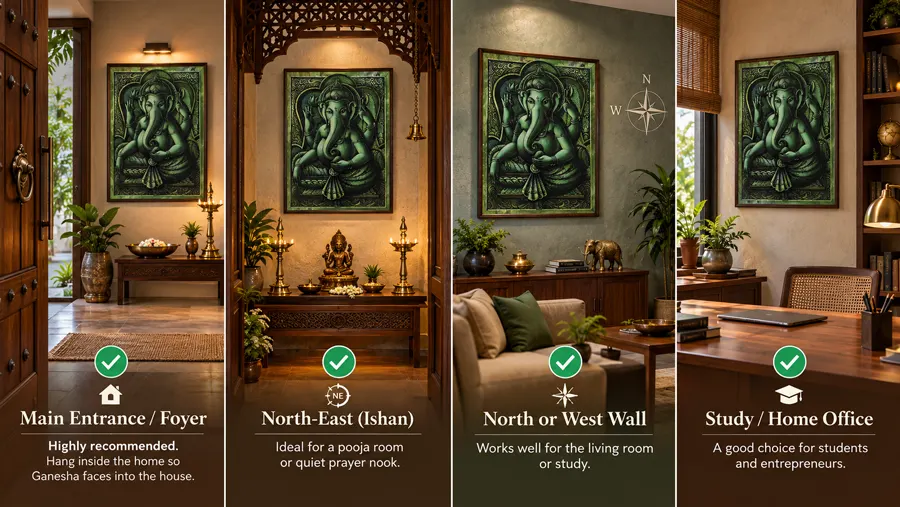
| Main entrance / foyer | Highly recommended. Hang the painting on a wall inside the home so Ganesha faces into the house, not out towards the street. | Ganesha guards the threshold and welcomes positive energy in. |
| North-east (Ishan) corner | Ideal for a pooja room or a quiet prayer nook. | Tradition treats the north-east as the most sacred zone of the home. |
| North or west wall | Both work well for the living room or study. | Practitioners link north with wealth and west with stability. |
| Study or home office | Good choice, especially for students and entrepreneurs. | Ganesha is the deity of wisdom and new beginnings. |
| Facing south | Avoid. You can hang the painting on any wall, but Ganesha should not face south. | Tradition links south with Yama, making it an inauspicious direction for a deity to face. |
| Bedroom, bathroom, staircase, store room, garage | Avoid. | These stay private or utility spaces, not suited to a deity. |
More Vastu tips to remember
A few additional rules of thumb come up again and again:
- Hang at eye level or slightly above. Never keep a Ganesha painting on the floor or leaning against a wall.
- Stick to one main Ganesha painting per room. Practitioners believe several deity images crowded on a gallery wall scatter the energy.
- Keep the wall clean and well lit. A dark or damp corner is not a place for a deity, and it is bad for canvas art anyway.
- Look for the mouse and the modak. Traditional paintings include Ganesha’s vehicle (the mouse) and a sweet in his hand, both symbols of a complete, auspicious image.
That said, Vastu is a matter of tradition and personal belief, not a strict rulebook. So treat these tips as helpful starting points, not rules. Many of our customers simply choose the wall where the painting looks best, and where they will see it every day.
Trunk Direction, Posture, and Colour: What They Mean
Left-turned vs right-turned trunk
Look closely at the trunk first. A trunk curving to Ganesha’s left (the viewer’s right) goes by the name Vamamukhi. This is by far the most common form for homes. It carries the calm, cooling energy of the moon, and it signals prosperity and happiness. Also, it needs no special rituals. By contrast, a trunk curving to Ganesha’s right (Dakshinamukhi, or Siddhi Vinayak) carries more power and demands stricter worship. So temples and strict daily-worship homes usually keep this form instead. If you are unsure, simply choose a left-trunk Ganesha painting.
Seated, standing, dancing, or reclining
For instance, a seated Ganesha is the classic choice for pooja rooms and entrances. It suggests stillness and a settled, peaceful home. Standing figures, instead, convey energy and forward movement, making them a good fit for offices and hallways. Meanwhile, a dancing (Nritya) Ganesha feels joyful and celebratory, and it looks wonderful in a living or dining room. Reclining forms, on the other hand, represent luxury and comfort. They often suit decorative lounges and bedrooms, though strict Vastu prefers no deity in the bedroom at all.
Colour symbolism in Ganesha art
Colour, too, lets you tailor a painting to your intention as well as your décor. For instance, white evokes peace, purity, and harmony. Vermilion or red suggests power, self-growth, and success, making it a popular choice for businesses. Yellow and gold, on the other hand, speak of knowledge and prosperity. Green, meanwhile, suggests growth, healing, and nature. In practice, most contemporary Ganesha paintings blend several colours. So simply choose whichever dominant tone suits the mood of your room.
Popular Ganesha Painting Styles for Home Décor
When choosing a Ganesha painting for home, style matters just as much as placement. In fact, Hindus paint Ganesha in more styles than almost any other deity. Below are the five styles our customers ask for most often, along with examples from our own studio.
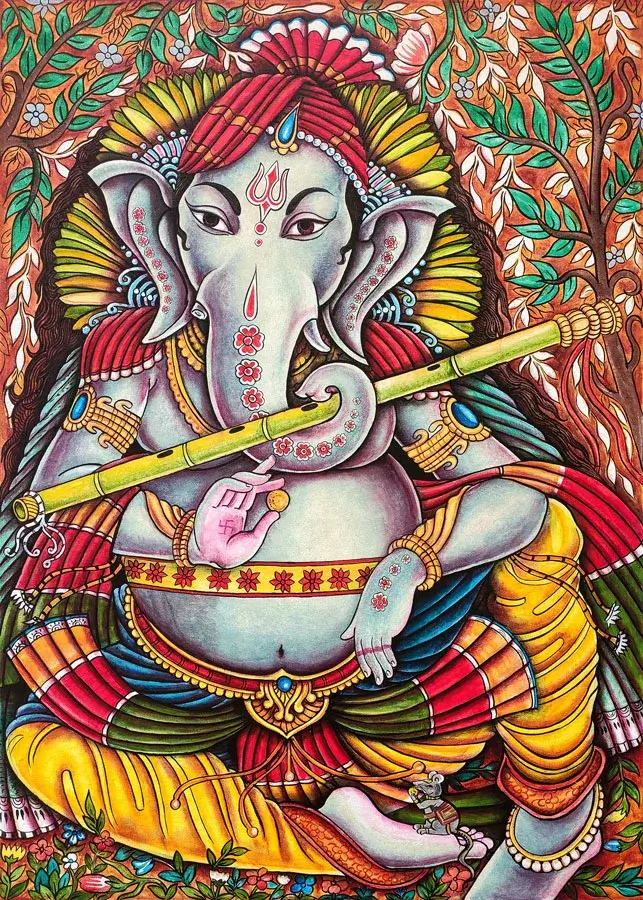
1. Kerala mural-style Ganesha
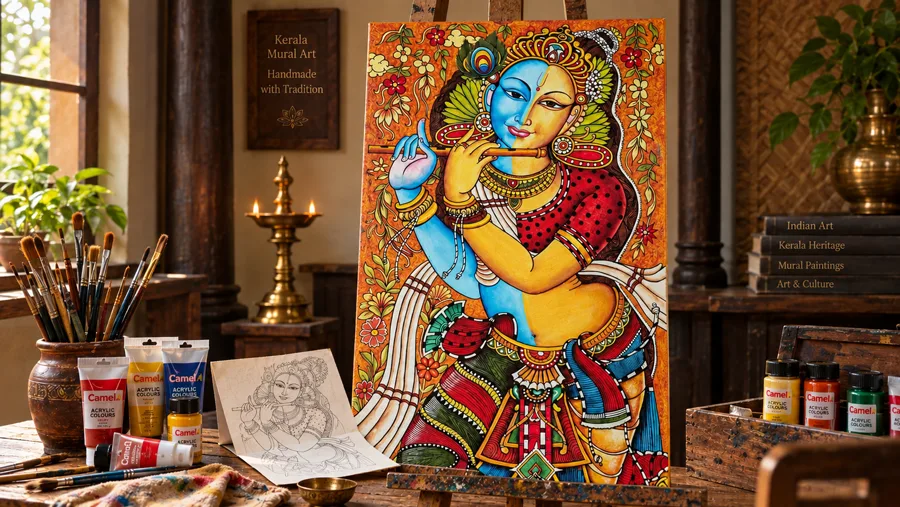
For example, mural-style Ganesha paintings come from the temple frescoes of Kerala. They use a palette of ochre, red, green, and gold, with fine black outlines and ornate crowns and jewellery.
As a result, they suit traditional and transitional interiors, wooden furniture, and pooja rooms particularly well. They also remain a favourite for housewarming gifts. Explore our full Kerala mural painting collection.
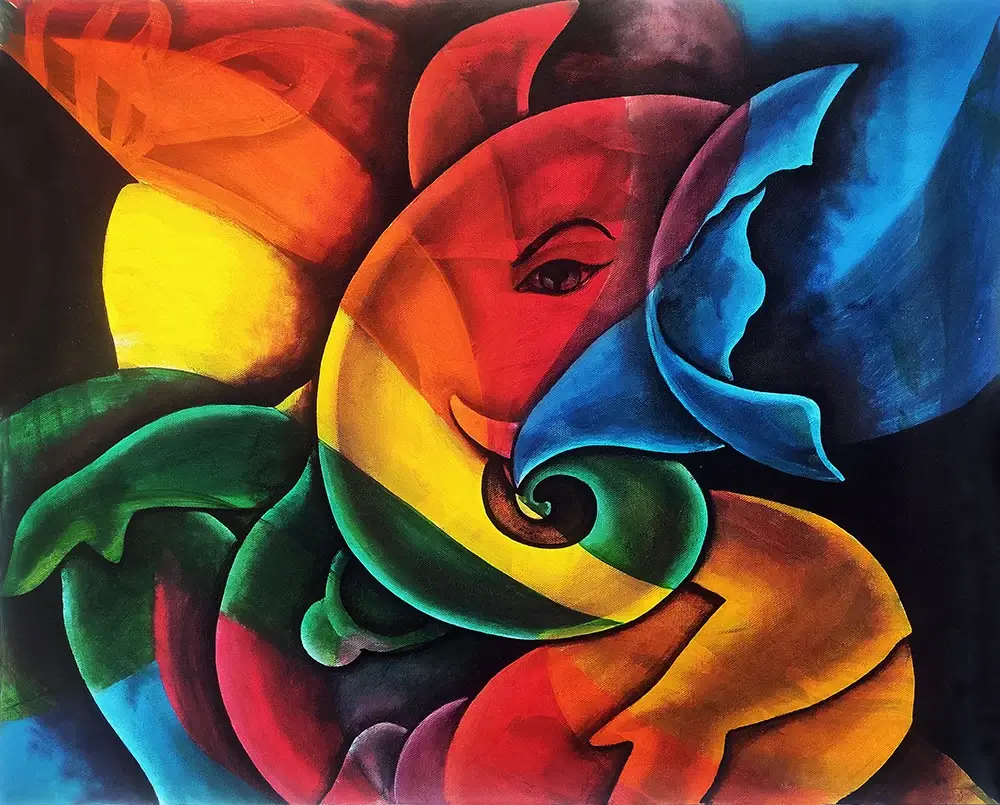
2. Abstract and Modern Ganesha
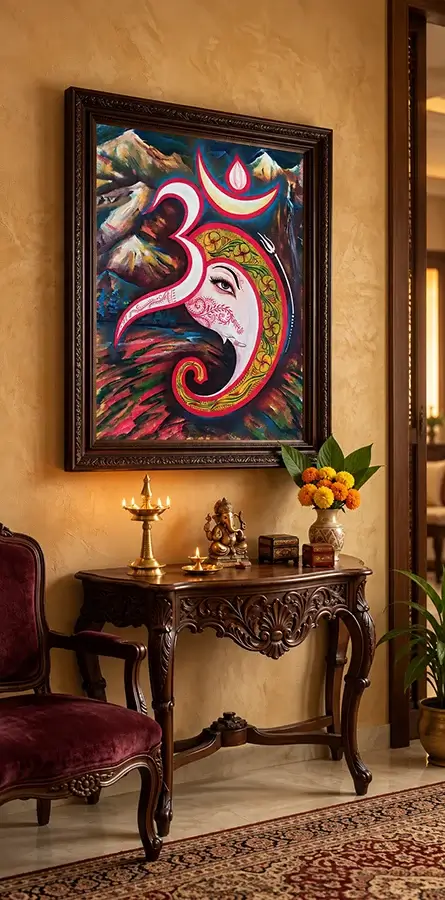
These paintings reduce the deity to flowing lines, geometric shapes, or bursts of colour. As a result, they become the go-to choice for modern apartments, minimalist homes, and offices, where a traditional image might feel out of place. Because the composition stays loose, these pieces also pair easily with contemporary furniture and neutral walls.
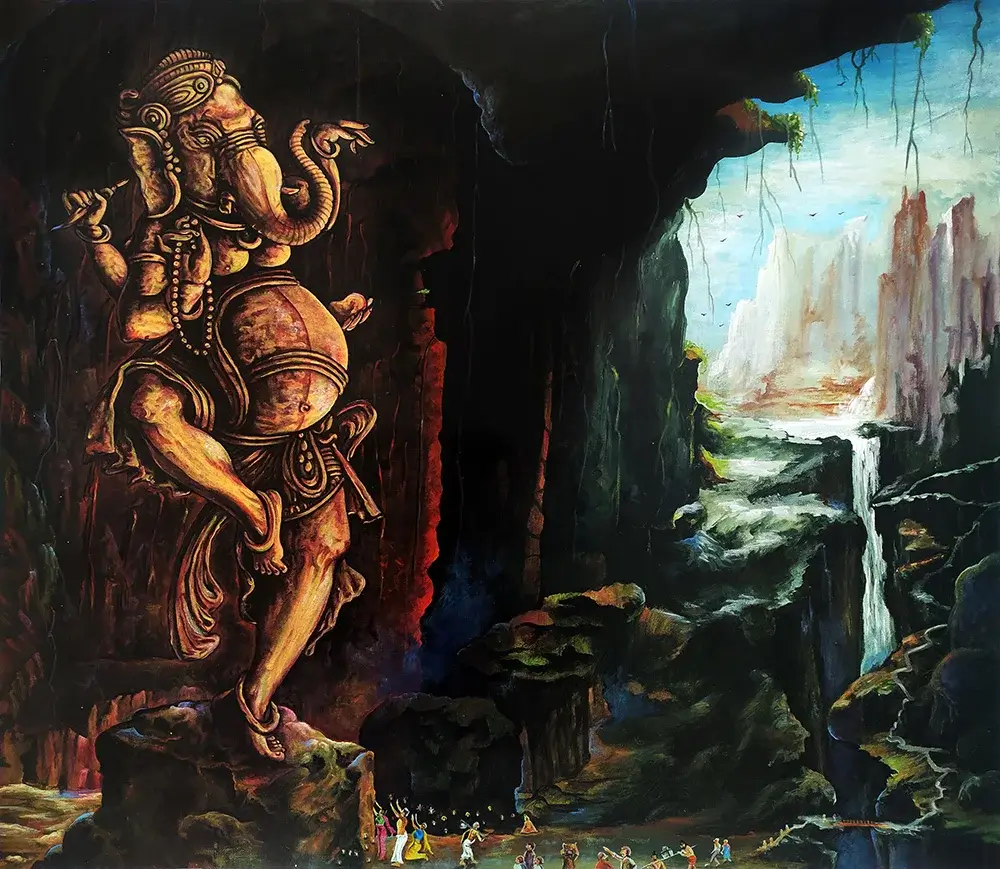
3. Realistic and Dramatic Ganesha
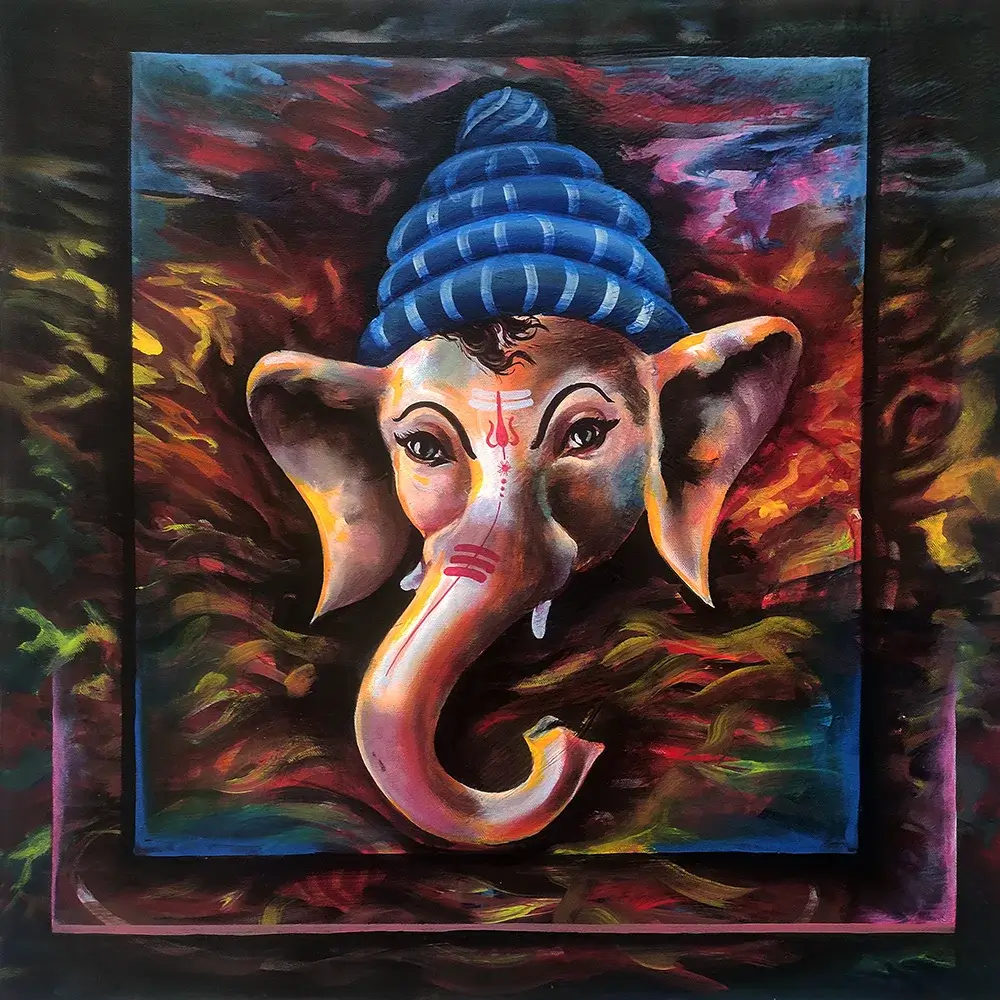
These paintings place the deity in a scene – a cave, a forest, a stone temple – rendered with careful light and shadow. These large-format statement pieces suit a spacious living room, a double-height foyer, or a boardroom best. After all, the painting needs distance to be appreciated fully.
4. Bal Ganesha (child Ganesha)
These paintings show the deity as a playful child, often alongside Baby Krishna or with his parents Shiva and Parvati. As a result, they bring warmth and innocence to family rooms and children’s study corners. They also make a thoughtful gift for a new baby or a young couple.
5. Monochrome and textured Ganesha
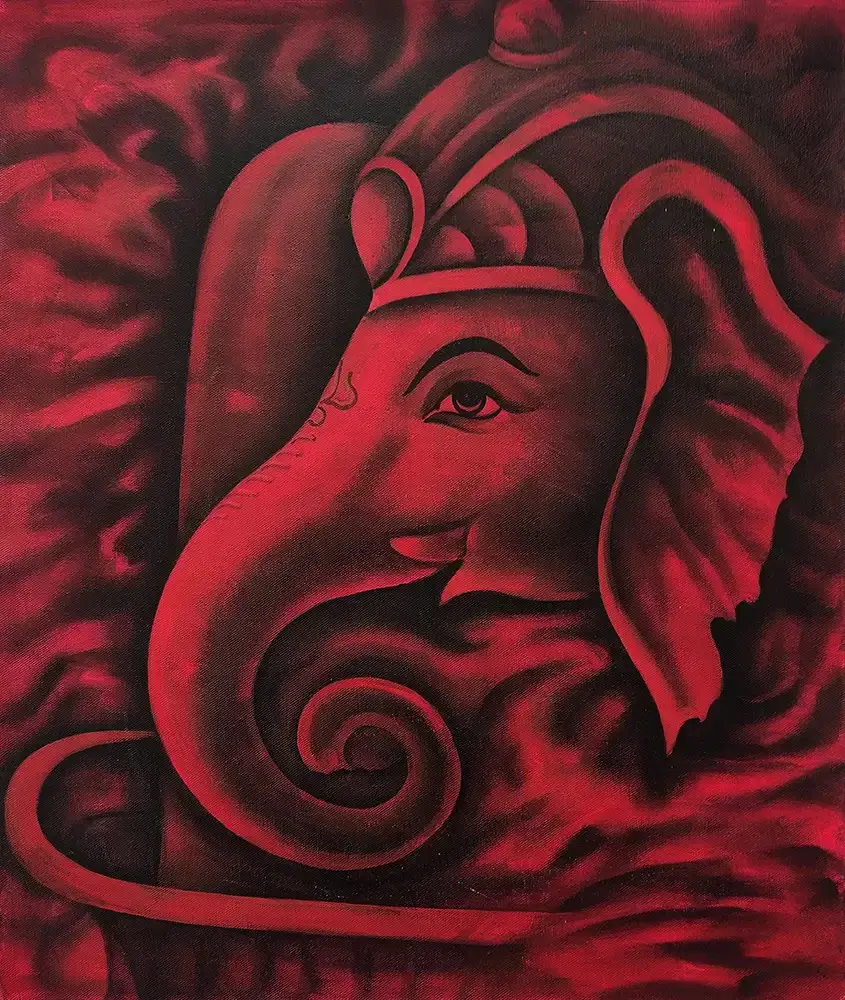
In practice, a single-colour Ganesha – deep red, charcoal, or gold on white – is the most versatile choice for designers. It reads as sculpture from across the room, and it works with almost any colour scheme. In textured versions, artists build up the paint in relief. As a result, it catches the light beautifully in a well-lit entrance. Browse our monochrome painting collection for more.
Ganesha Painting for Home: Size Guide by Room
Notably, the most common mistake we see is buying a painting that is too small for the wall. As a rule, artwork should cover roughly 60–75% of the width of the furniture or wall section beneath it. Here is a quick reference, using the sizes in our own collection:
| Space | Recommended canvas size | Suggested style |
|---|---|---|
| Entrance / foyer wall | 45–60 cm wide, portrait orientation | Seated mural or monochrome Ganesha |
| Pooja room | 30–50 cm wide | Traditional seated Ganesha, warm colours |
| Living room (above sofa or console) | 60–90 cm wide, or a large 80 × 110 cm centrepiece | Realistic, dancing, or abstract Ganesha |
| Study / home office | 45–65 cm wide | Standing or abstract Ganesha in calm tones |
| Office reception / boardroom | 90 cm and above | Dramatic realistic or bold monochrome |
We ship all of our original paintings as rolled, unstretched canvas. As a result, they travel safely anywhere in India or abroad, and any local framer can stretch and frame them. If you need a specific size for a particular wall, we also take custom painting commissions.
Original Painting or Print? What to Buy for Ganesh Chaturthi 2026
In short, both have a place. A high-quality canvas or acrylic print is affordable, quick, and perfect for a rented flat or a small pooja shelf. An original handmade Ganesha painting, on the other hand, is a different kind of purchase. It is one of a kind, the artist signs it personally, and it carries real texture and brushwork. As a result, it often becomes a family heirloom, and families pass it down and re-gift it at the next housewarming.
If you are gifting for Ganesh Chaturthi on 15 September 2026, a housewarming, or a new business opening, an original painting is the gift people remember. Our Ganesha originals start at entry-level prices for smaller abstract works, and go up to large signature pieces. So there is a piece for every budget – see the full Ganesha painting collection.
How to Care for an Acrylic Ganesha Painting
- Keep it out of direct sunlight. Acrylic resists fading, but years of harsh afternoon sun will still dull any pigment.
- Avoid kitchen smoke and incense build-up. If the painting hangs near a pooja space, keep lamps and agarbatti at a safe distance so soot does not settle on the surface.
- Dust with a soft, dry brush or microfibre cloth. Never use water, sprays, or household cleaners on the canvas.
- Frame it properly. Stretching the canvas on a wooden frame keeps it taut and protects the edges; a floating frame gives a gallery finish.
- Mind the humidity. In coastal or monsoon-heavy regions, leave a small gap between the canvas and the wall so air can circulate.
Frequently Asked Questions
Which direction should a Ganesha painting face in the house?
According to Vastu, place a Ganesha painting so that Ganesha faces into the home – towards the north, east, or west. Avoid a painting where Ganesha faces south. Also avoid hanging it outside the main door, facing the street.
Can I hang a Ganesha painting in the bedroom?
Traditional Vastu advises against placing deity images in bedrooms and bathrooms. If you would still like Ganesha in a bedroom, a small, decorative, non-worship image is the usual compromise. The living room, entrance, pooja room, or study make better choices overall.
Is a Ganesha painting a good housewarming gift?
Yes – it is one of the most popular housewarming gifts in India. That’s because families traditionally worship Ganesha at the start of anything new. So a mural-style or seated Ganesha in warm colours is the safest choice when you don’t know the recipient’s décor style.
Which colour Ganesha painting is best for a living room?
For a neutral or white living room, a warm mural-style or a bold monochrome red Ganesha adds an accent. In a colourful, eclectic room, on the other hand, a white or pastel Ganesha provides balance. Try matching the dominant colour of the painting to one accent colour already in the room – a cushion, a rug, or a curtain. This simple trick makes the whole look feel intentional.
Where can I buy an original Ganesha painting online in India?
Importantly, ASP Arts sells only in-house original artworks – no reproductions of other artists. Our artists hand-paint every Ganesha painting in the collection, in acrylic on canvas, in India. They sign each piece individually, and we ship it rolled with a certificate of authenticity. You can browse the collection, order online, or contact us for a custom Ganesha painting in the size and style you need.
Bring Ganesha Home This Chaturthi
In the end, a Ganesha painting for home is more than décor. It marks a new beginning, welcomes guests, and reminds a family, every day, to think big, listen more, and move past obstacles. So choose the right wall, the right size, and a style you’ll love for years. Then let the artwork do the rest.