If you’ve spent any time on home design pages lately, you’ve probably seen the word “Japandi” thrown around a lot. It’s the blend of Japanese minimalism and Scandinavian warmth — clean lines, natural materials, and a kind of quiet that most homes are missing. And nowhere does Japandi show up more clearly than on the walls.
The tricky part is that Japandi isn’t “no art.” It’s restrained art — fewer pieces, chosen more carefully, given more room to breathe. Here’s how to actually pull that off without your walls ending up bare and unfinished.
Where Japandi Actually Comes From
The word is a mashup of “Japanese” and “Scandinavian,” and the design philosophy borrows the best of both without becoming either one exactly. From Japan, it takes wabi-sabi — the appreciation of imperfection, natural materials, and simplicity. From Scandinavian design, it takes hygge — warmth, comfort, and function over ornamentation. Put together, you get rooms that feel calm without feeling cold, and minimal without feeling empty.
Wall art sits right at the intersection of those two ideas. Japanese minimalism pushes toward negative space and restraint. Scandinavian warmth pushes toward natural tones and texture. A single, well-chosen painting in earthy or monochrome tones does both jobs at once.
What Makes Wall Art “Japandi”
Three things, mostly. Muted, natural color palettes over anything loud. Simple subjects — a single tree, one animal, one figure — rather than busy compositions. And a lot of negative space, both within the painting itself and around it on the wall.
Monochrome and black-and-white paintings fit this style unusually well. Stripping out color forces the eye to focus on form and line, which is exactly the calm, uncluttered feeling Japandi rooms are going for.
The Golden Rule: Less, But Bigger
The most common mistake people make when trying this style is filling a wall with several small pieces, gallery-style. That’s a maximalist move, and it fights against everything Japandi is trying to do.
Instead, pick one painting and let it be the only thing on that wall. Size it generously — roughly 60 to 75% of the width of the furniture below it works well above a sofa, console, or bed. One confident piece with empty wall around it reads as intentional. Several small ones read as clutter.
Subjects That Work Well
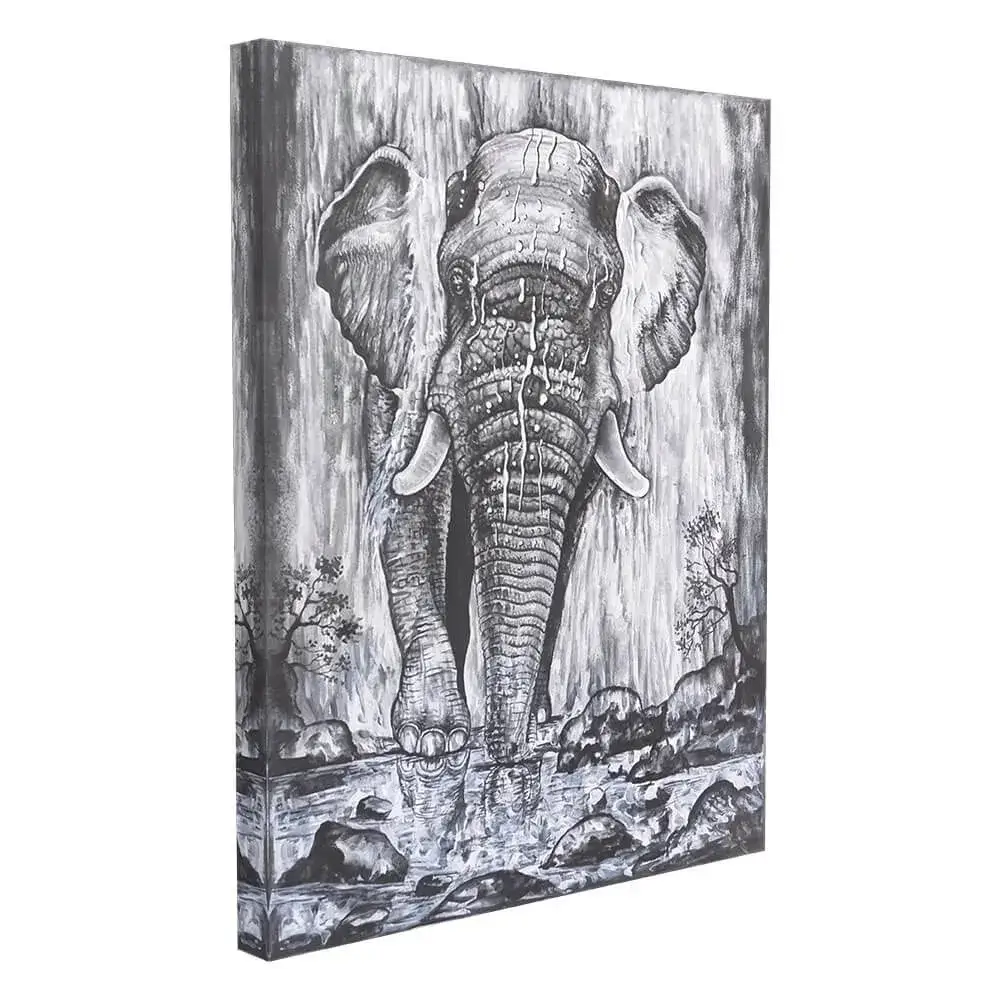
- A single animal in a natural setting — quiet, not dramatic
- A lone tree or simple forest scene
- A minimal figure study with soft lines
- Monochrome or near-monochrome pieces over highly saturated color
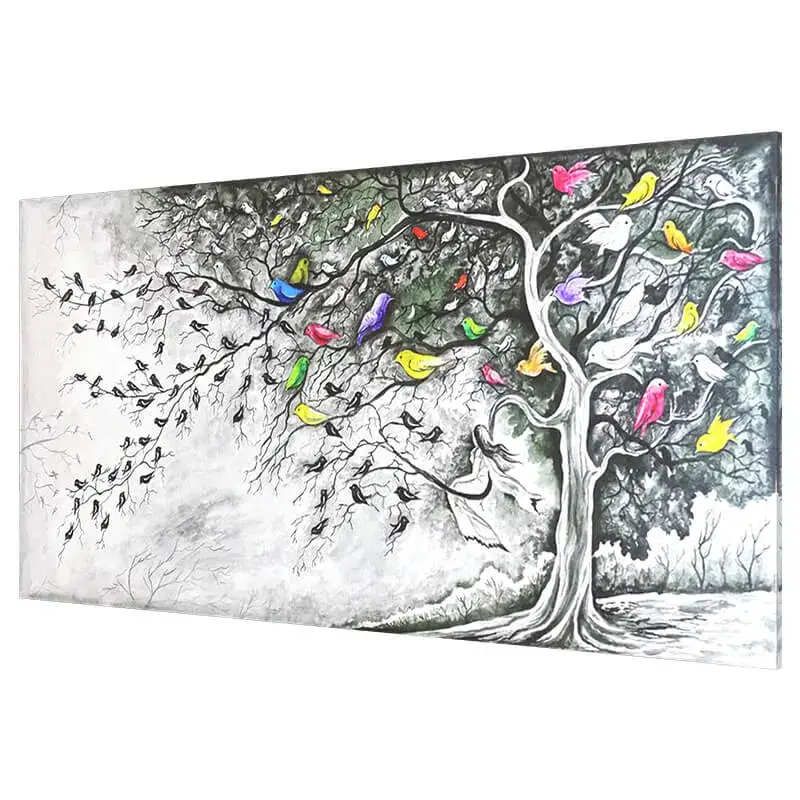
This kind of painting works precisely because it doesn’t try to do too much. One subject, one tone, plenty of open space within the frame itself.
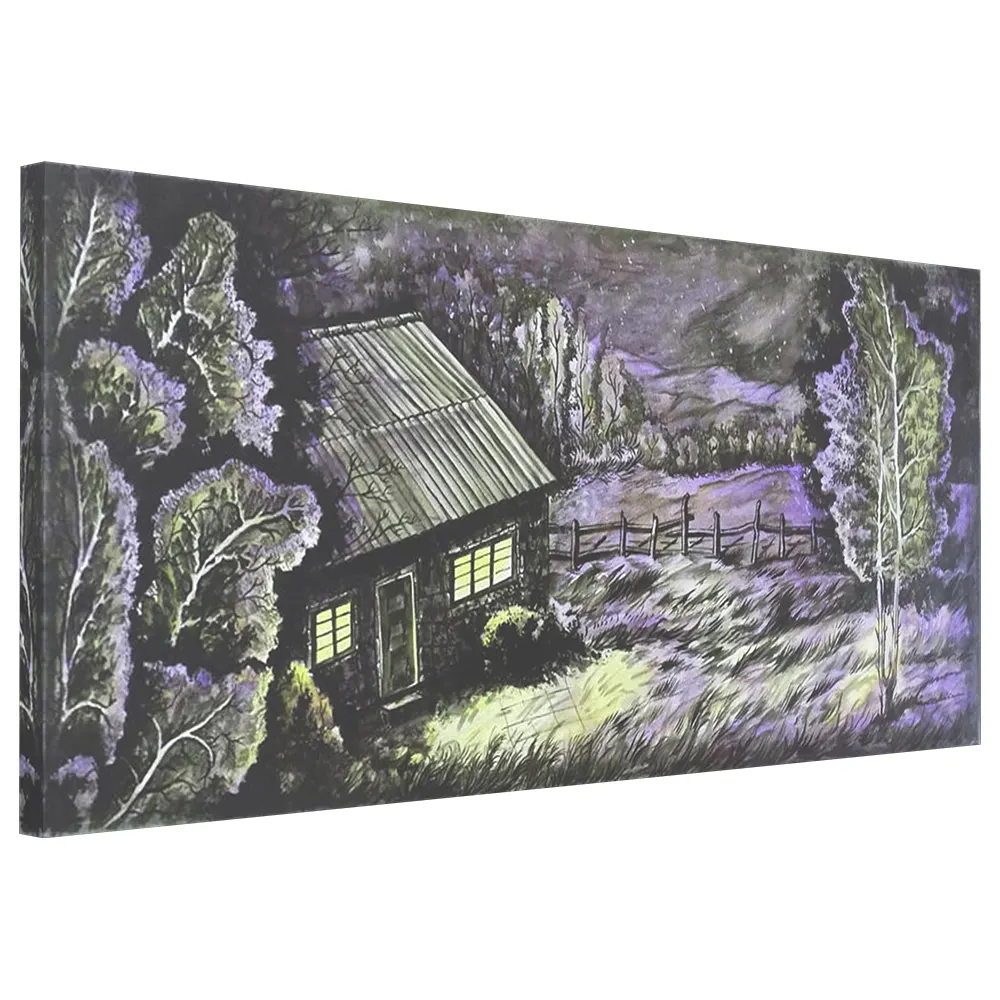
If you want a touch more warmth without breaking the minimalist mood, a muted landscape does the job just as well as a monochrome piece.
Where Japandi Wall Art Works Best
Bedrooms and reading nooks benefit the most — rooms where the goal is to slow down. It also works well in a home office. A single calm piece is far less distracting than a busy gallery wall during a work call. Living rooms can absolutely take a Japandi approach too. It just means resisting the urge to add “just one more” piece once the first one is up.
Renters can lean on this style just as easily as homeowners. Japandi doesn’t call for structural changes — no accent walls, no built-ins. A single well-chosen painting and a few natural-material accessories can transform a rented space just as effectively, and everything moves with you when the lease ends.
Framing and Finish
Keep frames simple — natural wood, thin black, or no frame at all on a gallery-wrapped canvas. Anything ornate or heavily gilded pulls the whole look back toward traditional decor, which defeats the point.
Building the Rest of a Japandi Wall
The wall around the painting matters as much as the painting itself. A plain, unpatterned wall in a warm off-white, soft grey, or muted clay tone gives the piece room to stand out. If the wall already has texture — limewash, plaster, exposed brick — lean toward a simpler, quieter painting so the two textures don’t compete.
Resist the instinct to add a shelf or a small side piece next to the painting just because the space feels available. In Japandi rooms, the empty space around a piece is doing real work — it’s not unfinished, it’s the point.
Japandi vs Plain Minimalism: What’s the Difference for Wall Art
Plain minimalism can tip into feeling sterile — white walls, glass, chrome, and nothing warm to anchor the room. Japandi avoids that by insisting on natural materials and a touch of imperfection. For wall art, that means choosing a painting with visible brushwork or organic subject matter over something perfectly geometric and machine-precise. A hand-painted piece carries small variations that come from being made by a human hand. It actually suits Japandi better than a flawless, uniform print ever could.
A Simple Way to Test If a Painting Fits
Before buying, ask three quick questions. Does the palette stay within two or three muted tones, rather than five or six competing colors? Is the subject simple enough to describe in one sentence? And is there enough open space within the composition itself for the eye to rest? If the answer to all three is yes, it will almost certainly work in a Japandi room.
A Closer Look at the Japandi Color Palette
If you’re shopping for a painting specifically for a Japandi room, it helps to have a mental shortlist of colors to look for. Warm neutrals — sand, oatmeal, warm grey — form the base of almost every Japandi space, so a painting with those tones will slot in immediately. Clay and terracotta add a grounded, earthy note without breaking the calm. Deep charcoal or true black, used sparingly, gives the room enough contrast to avoid looking washed out. And a single muted accent — sage green, dusty blue, faded ochre — is usually enough. Two or three competing accent colors in one painting will start to pull the room away from the Japandi look and toward something busier.
It’s worth noting what to avoid, too. Neon or highly saturated color, metallic finishes beyond a small brass or gold accent, and anything with a glossy, high-shine surface all tend to clash with the matte, natural-material feel Japandi rooms are built around.
Mixing Japandi Art into a Room That Isn’t Fully Japandi Yet
You don’t need to redo an entire room to bring in this style. Most people start with a single wall or a single piece of art and build outward from there. If your existing furniture is a mix of styles, a Japandi-style painting in muted, natural tones can actually help unify the room rather than clash with it. The neutral palette gives your eye a resting point among busier furniture choices.
A good approach is to hang the painting first, and live with it for a week or two. Then decide whether the rest of the room needs adjusting. Often, just having one calm, well-placed piece on the wall is enough to shift how the whole space reads, without touching the furniture at all.
If you’re starting from scratch, resist the urge to buy the painting and the furniture at the same time. Choose the room’s base tones first — wall color, flooring, main furniture pieces. Then bring in the painting last, once you can see how the light in the room actually behaves at different times of day.
Seasonal Considerations
Unlike more decorative styles that get swapped out seasonally, Japandi wall art is meant to stay put year-round. That consistency is part of what makes the room feel calm rather than constantly changing. If you do want a seasonal refresh, change smaller, swappable elements instead: a cushion cover, a throw, a vase of seasonal branches. Leave the anchor painting where it is.
Lighting a Japandi Painting the Right Way
Soft, warm lighting does more for a Japandi room than almost any other single choice. Avoid cool white or bright overhead lighting directly on the painting. It flattens the muted tones the style relies on and can make the piece look washed out rather than calm. A warm-toned lamp placed nearby, or a single picture light angled gently across the canvas, brings out the texture of the brushwork without overpowering the room.
Natural light is even better where you have it. Positioning a Japandi painting on a wall that catches soft, indirect daylight — rather than harsh, direct sun — lets the piece shift subtly through the day. That suits the quiet, understated mood the whole style is going for.
Two More Questions Worth Answering
Is Japandi just a passing decor trend?
It’s been building steadily for several years rather than spiking suddenly. That usually signals a longer-lasting style rather than a fad. The underlying ideas — natural materials, restraint, quality over quantity — tend to hold up well regardless of what’s trending elsewhere.
Can a large, bold painting still be Japandi?
Yes, as long as the palette stays muted and the subject stays simple. Size and boldness of scale aren’t the issue — busy color and cluttered composition are.
Frequently Asked Questions
Can Japandi wall art have any color, or does it have to be black and white?
It doesn’t have to be monochrome. Muted earth tones — clay, sage, warm grey, soft ochre — fit just as well as black and white. Just keep the palette limited and calm rather than bright or saturated.
How many paintings should a Japandi living room have?
Usually one per wall, at most. If the room has multiple walls that could hold art, it’s often better to leave one or two bare entirely. Don’t feel pressure to fill every available surface.
Does Japandi work with a small apartment?
It’s arguably better suited to small spaces than most other styles. The restraint and negative space it calls for naturally keep a small room from feeling cluttered.
What frame style suits Japandi art best?
Natural wood in a light or warm tone, thin black metal, or no frame at all on a gallery-wrapped canvas. Avoid ornate, dark, or heavily carved frames.
The Takeaway
Japandi wall art isn’t about owning less art — it’s about choosing better and giving each piece room to matter. One well-chosen, generously sized painting will always beat a wall crowded with smaller ones. Start with the piece, then build the calm around it.
You can browse our full range of monochrome paintings and landscape paintings — every piece is hand-painted on canvas by our artists in India.