
(1) Where Every Masterpiece Begins
Every original paintings begins long before the first brush touches the canvas. It starts with an idea—a quiet moment of inspiration that slowly grows into a clear artistic vision. Sometimes that inspiration comes from the beauty of nature. At other times, it comes from a meaningful conversation, a treasured family memory, the peaceful expression of a spiritual figure, or the gentle eyes of a beloved pet. Whatever the source may be, every painting begins with a story waiting to be told.
At ASP Arts, we believe that great artwork is never created by chance. Instead, it grows through careful thought, creative planning, and genuine passion. Therefore, before a single colour is chosen, we spend time understanding the emotion the painting should convey. We ask ourselves an important question: What should the viewer feel when they stand in front of this artwork? The answer to that question guides every decision that follows.
Unlike mass-produced prints, Handmade Wall Art carry the personal touch of the artist. Every brushstroke reflects patience, skill, and creativity. In addition, every detail is shaped by experience, making each artwork truly one of a kind. As a result, no two paintings are ever exactly alike, even when they share the same subject or theme.
Creating art is not simply about filling a canvas with colours. It is about transforming an empty surface into something that speaks to the heart. Whether the final piece becomes a peaceful landscape, a vibrant wildlife painting, a meaningful portrait, or a striking abstract composition, the journey always begins with imagination.
Throughout this article, we invite you to step inside our creative studio and discover how an original painting come to life. From the earliest spark of inspiration to the final signature, every stage reflects our commitment to quality, craftsmanship, and artistic excellence.
Studio Note
Every original handmade paintings at ASP Arts begins with a blank canvas, but it never begins with a blank mind. Long before painting starts, ideas, emotions, colours, and compositions take shape in the artist’s imagination.
(2) Every Handmade Acrylic Paintings Begins with an Idea
Every Original handmade paintings begins long before the first brush touches the canvas. At ASP Arts, our Original Art Collection begin with inspiration, careful planning, and artistic passion. However, inspiration rarely arrives as a complete picture. Instead, it grows little by little through observation, curiosity, and everyday experiences. For an artist, the world becomes a never-ending source of ideas.
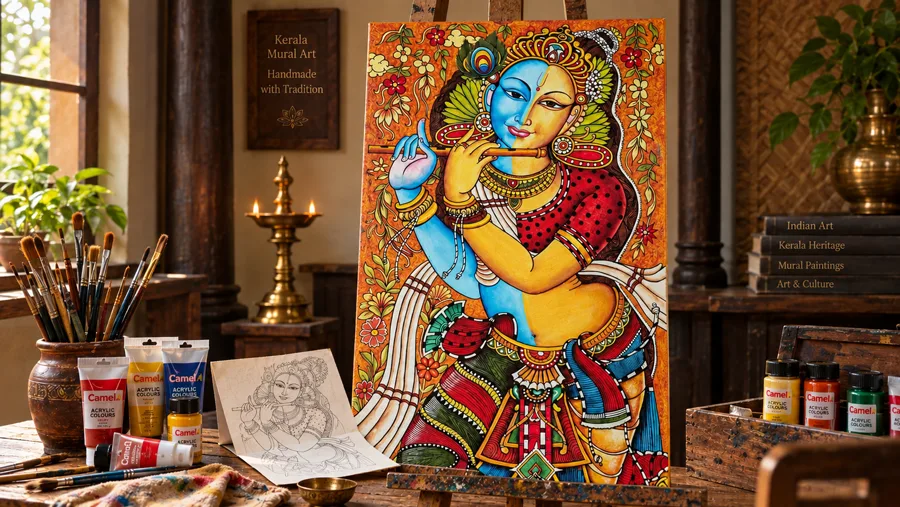
Sometimes inspiration comes from a breathtaking sunrise that fills the sky with warm colours. At other times, it comes from the graceful movement of wildlife, the peaceful atmosphere of a temple, the rich traditions of Kerala mural art, or the joyful smile shared within a family. Even the smallest moments can leave a lasting impression. As a result, artists learn to notice beauty where others may simply pass by.
Many of our paintings also begin with our clients’ stories. A family may wish to celebrate a special milestone with a custom portrait. A pet owner may want to preserve the memory of a faithful companion. Someone else may look for a spiritual painting that brings peace into their home. Every request carries personal meaning, and every story deserves thoughtful attention.
Rather than copying what already exists, we focus on creating artwork with originality and emotion. Therefore, we explore different concepts, collect reference images, study colours, and imagine several creative possibilities before deciding on the final direction. This process allows us to create paintings that feel personal instead of predictable.
Creative inspiration also comes from continuous learning. We regularly study classical art, modern design, architecture, nature, photography, and cultural traditions. In addition, we observe how light changes throughout the day, how colours interact with one another, and how emotions can be expressed through composition alone. These observations help us create artwork that feels alive and timeless.
Every idea, no matter how small, has the potential to become a masterpiece. The artist’s role is to nurture that idea with patience, imagination, and dedication until it reaches its full potential.
Studio Note
We often fill pages with small sketches and colour ideas before choosing the final concept. Exploring different possibilities helps us discover the strongest composition and the most meaningful visual story.
(3) Research, Inspiration & Creative Planning for Original Artwork
Once the idea has taken shape, the next stage begins. Although many people imagine that artists immediately start painting, the reality is very different. In fact, This planning stage helps ensure that every Original Art Collection reflects artistic excellence and lasting beauty. It often takes just as much time as painting itself to bring the original paintings come to Life. This stage forms the foundation of the entire artwork, and every decision made here influences the final result.
(A) Understanding the Subject
Every subject deserves careful study. Therefore, we begin by learning as much as possible about what we plan to paint. If we are creating a portrait, we study facial expressions, proportions, personality, and lighting. If the subject is wildlife, we observe movement, anatomy, fur, feathers, and natural habitats. Likewise, when painting religious artwork, we research traditional symbolism, cultural significance, and historical references to ensure authenticity and respect.
Colour also plays an important role in this stage. Different colours create different emotions. Warm tones often communicate energy and celebration, while cooler tones bring calmness and reflection. As a result, every colour palette is selected with purpose rather than preference alone.
Lighting receives equal attention. The direction of light affects depth, mood, texture, and realism. Even a small adjustment can completely change how viewers experience a painting. Therefore, we experiment with different lighting ideas before finalising the composition.
(B) Designing the Composition
A successful painting is more than a beautiful subject. It also needs strong composition. Composition guides the viewer’s eyes across the original paintings and creates balance between every element so it brings to life.
Before we begin painting, we explore several layouts. We carefully position the main subject, adjust the background, and create visual pathways that naturally lead the viewer from one area to another. In addition, we consider negative space, perspective, and the relationship between light and shadow.
At this stage, storytelling becomes especially important. Every painting should communicate something beyond its appearance. Whether the message is peace, devotion, strength, love, or wonder, the composition must support that emotional goal. Therefore, we continue refining the design until every element works together in harmony.
Only when the composition feels complete do we move forward with confidence. A strong plan reduces unnecessary corrections later and allows creativity to flow naturally during the painting process.
Studio Note
Many viewers admire the finished painting without realising that hours—or even days—were invested in planning its composition. Careful preparation helps transform a good idea into an unforgettable work of art.
(4) Sketching the Original Painting to life
With a clear concept and a detailed planning stage helps ensure that every original paintings reflects artistic excellence and lasting beauty. The original paintings come to life. However, before vibrant colours fill the canvas, the first marks are usually made with a simple pencil. These light, confident lines become the blueprint for everything that follows.
The initial sketch focuses on structure rather than detail. We establish the main shapes, define proportions, and position every important element on the canvas. At this stage, flexibility is essential. Therefore, we make adjustments whenever necessary, refining the balance between the subject and the surrounding space until the overall composition feels natural.
As the sketch develops, finer details gradually emerge. Facial expressions become clearer, flowing garments gain movement, architectural elements find their correct perspective, and natural forms begin to feel more lifelike. Every revision brings the artwork one step closer to its final vision.
Sketching also gives us the freedom to solve challenges before paint is applied. It is far easier to adjust a pencil line than to repaint multiple layers of colour later. As a result, this stage saves time while improving accuracy and overall quality.
Most importantly, the sketch establishes the emotional foundation of the painting. A gentle smile, a calm posture, or the graceful curve of a tree branch may appear simple, yet these details often determine how viewers connect with the finished artwork.
By the time the sketch is complete, the Original Art already exists in spirit. The canvas is no longer empty—it now carries the promise of something meaningful. The next stage will bring that vision Making Original Paintings coming to life is done with carefully selected colours, layered brushstrokes, and refined techniques gradually transform the drawing into an original artwork.
(5) Choosing Premium Materials
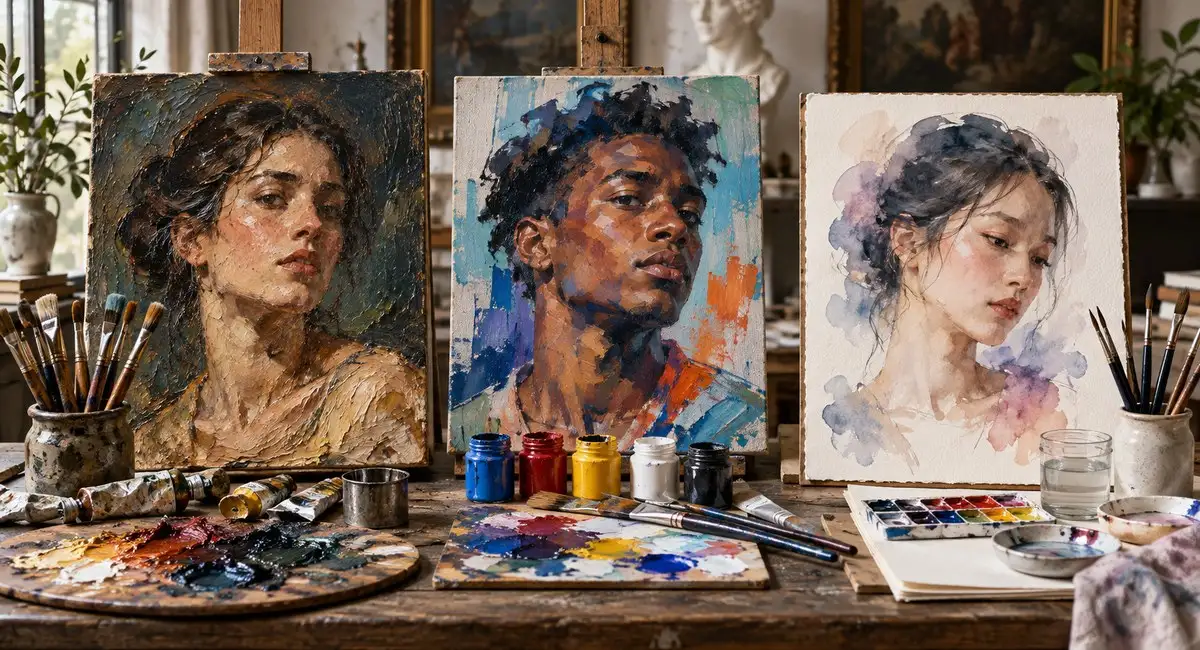
Every memorable painting deserves a strong foundation. Therefore, selecting the right materials is one of the most important decisions in the creative process. Even the most skilled artist cannot achieve outstanding results without reliable tools and high-quality supplies. At ASP Arts, we believe that excellent craftsmanship begins with excellent materials.
The journey starts with the canvas. We carefully choose canvases that offer the right texture, strength, and durability for each artwork. A well-prepared canvas allows colours to spread evenly while supporting every brushstroke with confidence. In addition, it helps preserve the painting for many years, allowing future generations to enjoy its beauty.
Professional acrylic paints are selected for their rich pigmentation, smooth consistency, and excellent lightfastness. Unlike lower-quality paints, professional colours remain vibrant over time and resist fading when displayed under normal indoor conditions. As a result, every artwork maintains its brilliance long after it leaves the studio.
Brushes also play a vital role. Instead of relying on a single brush, artists use a wide variety of shapes and sizes throughout the painting process. Larger brushes help establish backgrounds and broad colour areas. Medium brushes build forms and textures. Finally, the smallest brushes create delicate details that give life to the artwork.
Our studio also includes palette knives, blending tools, texture mediums, varnishes, and protective coatings. Although these tools often remain unnoticed by viewers, they contribute significantly to the finished result. Every material is selected with care because each one supports the quality and longevity of the artwork.
However, materials alone do not create exceptional paintings. They simply provide the artist with the freedom to express creativity without unnecessary limitations. When premium materials meet years of artistic experience, every canvas gains the opportunity to become a timeless piece of fine art.
Studio Note
We never choose materials based only on cost. Instead, we select products that deliver consistent quality, lasting durability, and beautiful colour performance. This careful approach helps every artwork retain its beauty for years to come.
(6) The First Brushstroke: Bringing Colour to the Canvas
After hours of planning, research, and sketching, the moment finally arrives when colour touches the canvas for the first time. Although this appears to be the beginning of the painting, it actually represents the result of many creative decisions made earlier. Every colour has already been considered, and every major shape has already been planned.
The first layer rarely contains small details. Instead, broad areas of colour establish the overall mood and visual balance. Warm tones may create energy and excitement, while cooler shades introduce calmness and depth. At this stage, the focus remains on harmony rather than perfection.
Artists often describe this moment as one of the most exciting parts of the creative journey. A blank canvas slowly begins to transform into something meaningful. Every brushstroke adds confidence, and every new layer reveals more of the final vision.
Colour selection is never random. Before applying paint, we consider how different shades interact with one another. We also think about lighting, atmosphere, and emotional impact. As a result, every colour contributes to the overall story rather than existing as an isolated element.
This stage also requires flexibility. Sometimes a colour appears stronger than expected. Occasionally, an area feels too dark or too bright. Instead of accepting these imperfections, we make thoughtful adjustments until every section feels balanced. This willingness to refine the work allows the painting to develop naturally without losing its original vision.
Most importantly, patience guides every decision. Rather than rushing through the process, we allow the painting to evolve one layer at a time. This careful approach creates harmony between colours and prepares the canvas for the next stage of refinement.
Studio Note
The first brushstroke is never about finishing the artwork quickly. It simply marks the beginning of a creative conversation between the artist, the canvas, and the colours that gradually bring the story to life.
(7) Building Depth Through Layers
One of the defining characteristics of professional artwork is depth. A painting should never appear flat or lifeless. Instead, it should invite viewers to explore every corner of the canvas, discovering new details each time they look. This sense of depth develops gradually through carefully applied layers.
Rather than completing each section in a single attempt, we build the painting step by step. Every new layer adds colour variation, texture, light, and shadow. As a result, the artwork begins to feel more realistic and visually engaging.
Transparency also plays an important role. Thin layers allow underlying colours to remain visible, creating richness that cannot be achieved with a single application of paint. Meanwhile, thicker brushstrokes introduce texture that captures light from different angles. Together, these techniques give the artwork movement and character.
During this stage, lighting becomes increasingly important. Highlights bring attention to important subjects, while shadows create depth and perspective. Even subtle changes in contrast can dramatically influence how viewers experience the finished painting. Therefore, each adjustment receives careful attention before the next layer is added.
Texture is another essential element. Smooth transitions may create calmness, while expressive brushstrokes communicate energy and emotion. Depending on the subject, we vary our techniques to achieve the desired effect. For example, soft blending suits portraits and spiritual artwork, whereas stronger textures often enhance landscapes, wildlife, and abstract paintings.
This stage demands patience because acrylic paint dries quickly, yet each layer still requires careful observation before additional colours are applied. Rushing the process may reduce depth and weaken the overall composition. Instead, we evaluate every stage carefully and continue refining the artwork until the painting feels balanced from every viewing distance.
Gradually, the canvas begins to transform. Simple shapes evolve into realistic forms. Flat colours gain atmosphere. Light begins to dance across textured surfaces. Most importantly, the painting starts to communicate emotion long before the final details appear.
Studio Note
We often step back several times during the painting process. Viewing the artwork from a distance reveals balance, proportions, and colour relationships that are difficult to notice while working close to the canvas.
(8) Creating Fine Details That Bring Art to Life
As the painting develops, the broad composition slowly gives way to the smallest details. This stage requires patience, precision, and a deep understanding of the subject. Although the artwork already looks complete from a distance, the finest details often determine whether it simply looks beautiful or truly feels alive.
Every brushstroke now serves a clear purpose. Facial expressions become softer and more natural. Gentle highlights are added to the eyes, allowing them to reflect light and emotion. Hair gains texture, fabrics appear more realistic, and natural elements such as leaves, feathers, water, or clouds begin to show their individual character. As a result, every part of the painting works together to create a richer visual experience.
At ASP Arts, we believe that details should never overpower the composition. Instead, they should quietly support the story the artwork is telling. Therefore, we constantly step back from the canvas, observe the painting from different angles, and carefully evaluate its overall balance. Looking from a distance often reveals relationships between colours, light, and proportions that may not be obvious while working close to the canvas.
Colour refinement also continues throughout this stage. Sometimes a shadow needs to become softer. At other times, a highlight requires greater brightness to create depth. Rather than accepting the first result, we continue making thoughtful adjustments until every section feels natural and harmonious. This careful refinement helps transform a good painting into an exceptional work of art.
Texture plays an equally important role. Smooth blending creates calmness and elegance, while expressive brushstrokes introduce movement and energy. Depending on the subject, we combine both techniques to achieve the desired effect. For example, a portrait may require delicate skin tones and subtle transitions, whereas a landscape or wildlife painting often benefits from stronger textures that suggest movement, atmosphere, and natural beauty.
Light remains one of the most powerful creative tools. Highlights guide the viewer’s eyes toward the focal point, while carefully placed shadows create depth and realism. Even a slight adjustment can completely change the mood of the painting. Therefore, every layer is evaluated before the next one is added.
However, artistic decisions are never based on technical rules alone. Emotion always remains at the centre of the creative process. Every expression, colour transition, and texture should help viewers connect with the artwork on a personal level. Whether the painting represents a peaceful spiritual figure, a beloved family member, a loyal pet, or an inspiring landscape, the goal remains the same—to create an emotional experience that continues long after the viewer leaves the room.
These final refinements often require several hours or even days. Nevertheless, we never rush this stage. Every small improvement adds character, strengthens the composition, and brings the painting closer to its true potential.
Studio Note
We often pause between painting sessions and return with fresh eyes. A short break allows us to notice small details that can make a remarkable difference in the finished artwork.
(9) Knowing When a Painting Is Truly Complete
One of the questions we hear most often is, “How do you know when a painting is finished?” The answer is surprisingly simple, yet deeply personal. A painting is complete not when every inch of the canvas is covered with colour, but when every element works together in harmony and nothing more needs to be added.
Many people imagine that artists simply stop painting once the subject looks realistic. In reality, deciding when to stop requires just as much experience as knowing where to begin. Every additional brushstroke has the potential to improve the artwork—or reduce its natural beauty. Therefore, knowing when to put the brush down becomes an essential part of the creative process.
Before reaching that moment, we carefully examine every section of the painting. We review the composition, colour balance, lighting, texture, proportions, and overall visual flow. In addition, we compare the finished artwork with the original creative vision developed during the planning stage. This final review ensures that the painting communicates the intended emotion while maintaining artistic balance.
Viewing distance also becomes important. We examine the painting from nearby to inspect fine details. Then we step back several metres to experience the artwork as future collectors will see it in their homes or workplaces. This simple practice often reveals subtle improvements that enhance the overall presentation without changing the original character of the artwork.
Once the final adjustments are complete, the painting enters its last stage. We carefully clean the edges, refine any remaining details, and inspect the surface under different lighting conditions. Afterwards, the artwork receives the artist’s signature. Although the signature may appear small, it represents countless hours of creativity, patience, and dedication. More importantly, it confirms that the painting has reached the standard we proudly associate with ASP Arts.
For us, signing a painting is not simply the final task on a checklist. Instead, it marks the successful completion of a creative journey that began with a single idea. Every original artwork carries its own story, and every completed painting reflects the time, passion, and craftsmanship invested throughout the entire process.
Yet the journey does not truly end here. Soon, the painting will leave the studio and become part of someone else’s story. It may brighten a family home, inspire visitors in an office, bring peace to a prayer room, or become a treasured gift passed from one generation to another. Knowing that our artwork will continue creating meaningful memories makes every hour spent in the studio worthwhile.
Studio Note
One of the most rewarding moments for any artist is signing a finished painting. It is not simply a signature—it is a quiet promise that every artwork leaving our studio reflects the highest standards of creativity, craftsmanship, and care.
10) Transition to artwork leaving the studio
At this stage, the artwork is artistically complete. However, our responsibility does not end with the final brushstroke. Before any painting leaves the studio, it goes through a careful quality inspection, professional finishing process, and secure packaging procedure. These final steps ensure that every collector receives an original artwork in excellent condition, ready to become a lasting part of their home or workspace.