
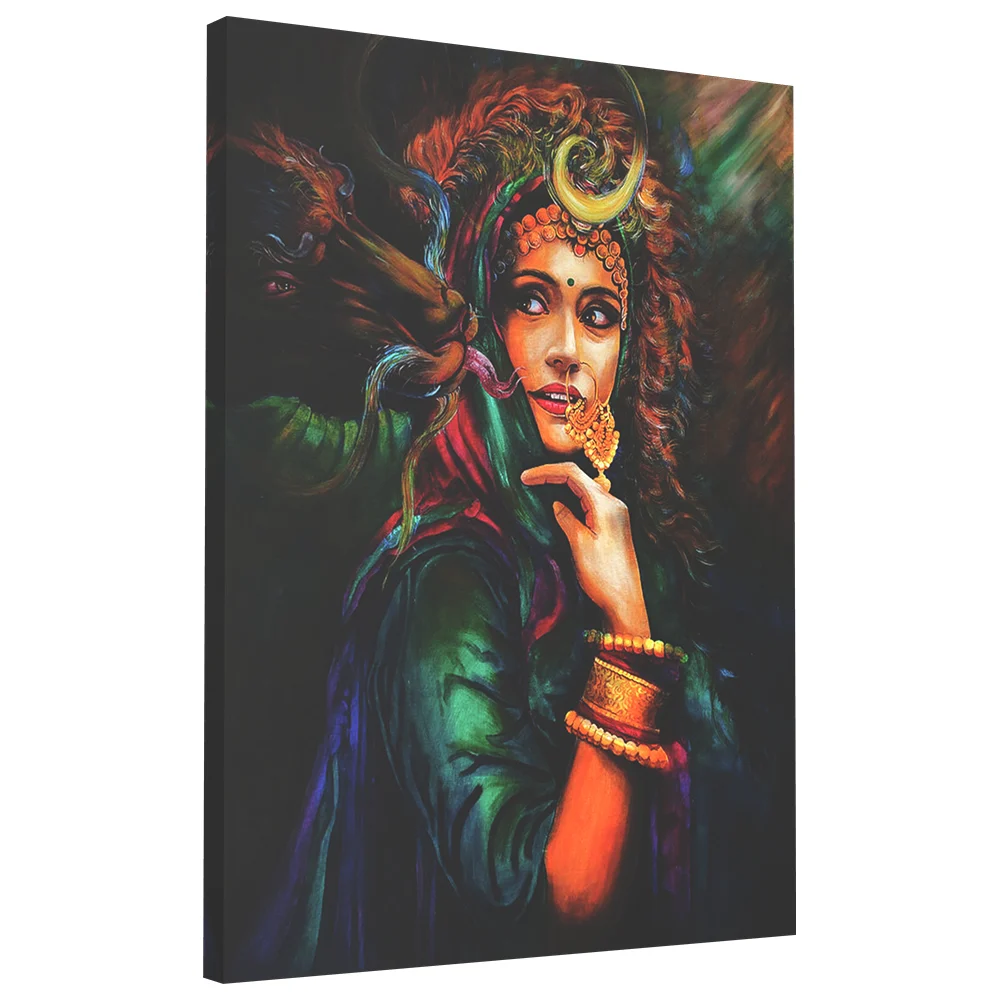
After all, a living room without art feels unfinished, no matter how good the furniture is. The right painting for living room walls pulls the whole space together. It also does more: it sets the mood, adds colour, and gives guests something to talk about. But picking one is not simple. You need to think about wall size, sofa colour, room direction, and personal taste, all at once.
This guide makes it simple. First, we cover Vastu direction for living room art. Next, we explain how to size a painting correctly. Then we walk through the styles that work best – abstract, landscape, figurative, and religious – so you can match one to your room’s mood.
Vastu Direction for Living Room Paintings
According to Vastu Shastra, the north and east walls work best for a living room painting. As a result, these directions welcome positive energy into the home. The south and south-west walls, however, work better for heavier or darker pieces, since Vastu links them with stability rather than fresh energy.
Quick placement rules
- Water scenes (rivers, waterfalls, boats): place on the north or east wall, never the south.
- Rising sun, mountains, or bright landscapes: the east wall works best.
- Abstract or bold colour pieces: almost any wall works, since there is no water or figure to orient.
- Avoid sad or violent imagery. Vastu discourages war scenes, wilting flowers, or lone, isolated figures in a living room.
That said, treat these as guidelines, not rules. Many of our customers simply choose the wall that gets the best light and the most eye contact from the sofa.
How to Size a Painting for Your Living Room
Notably, size is where most people go wrong. A small painting on a large wall looks lost. So, as a rule, your artwork should cover 60–75% of the width of the furniture below it – typically the sofa or console table.
| Wall or furniture width | Recommended painting width | Best approach |
|---|---|---|
| Small sofa (under 6 ft) | 36–48 inches | One medium painting, or a pair side by side |
| Standard sofa (6–7 ft) | 48–60 inches | One large painting, or a 3-piece set |
| Large wall / open-plan living room | 60 inches and above | An oversized single painting, or a gallery wall of 4–6 pieces |
| Above a console or sideboard | Match the furniture’s width, or slightly less | One horizontal painting |
Also, hang the centre of the painting at eye level – about 57–60 inches from the floor. If it hangs above a sofa, leave 6–8 inches of space between the top of the sofa and the bottom of the frame. This keeps the painting connected to the furniture, rather than floating awkwardly near the ceiling.
Which Style Suits Your Living Room?
In short, every living room has its own mood. Here are the four styles we recommend most often, and where each one works best.
Abstract and figurative art
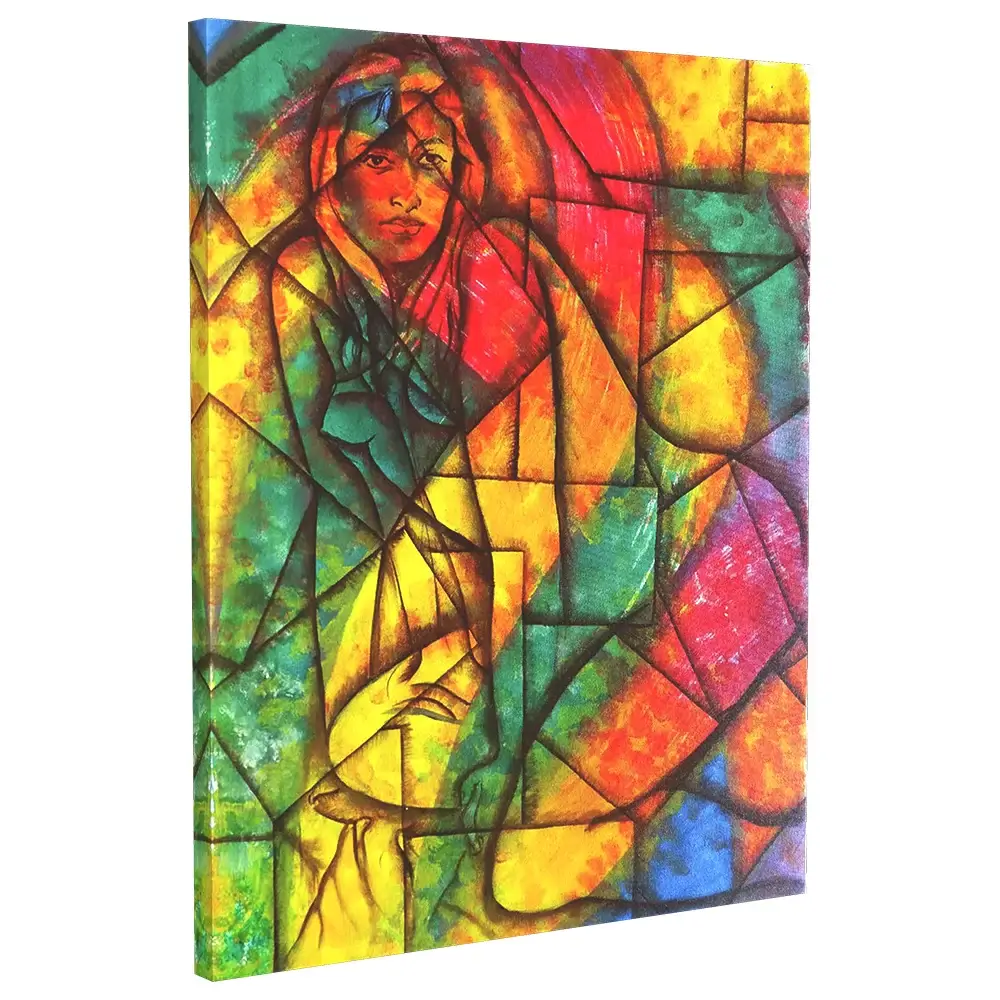
These paintings suit modern, minimalist, and eclectic living rooms best. They add colour and personality without demanding a theme. As a result, they pair easily with neutral sofas and simple furniture. Browse our abstract painting collection.
Landscape and nature scenes
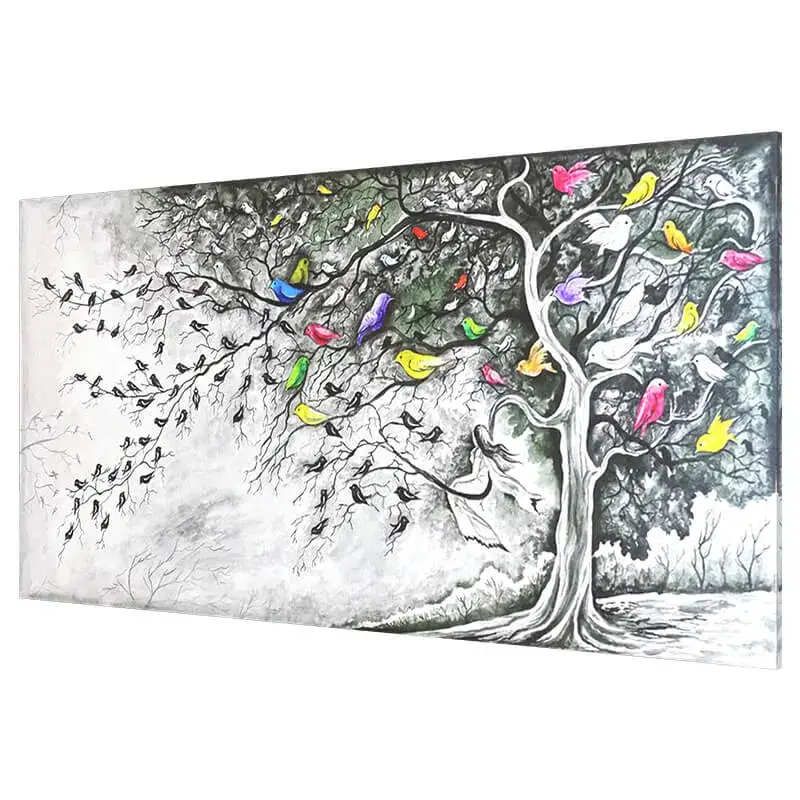
Forests, rivers, and mountains bring calm to a busy household. In fact, this is the most universally liked style, and it works in almost any colour scheme. It suits traditional and transitional homes especially well. Explore our landscape painting collection.
Monochrome and textured pieces
A single-colour painting reads as sculpture rather than picture. So it works especially well in a living room with patterned cushions, rugs, or wallpaper, since it does not compete for attention. Designers often choose monochrome art for exactly this reason. See our monochrome collection.
Religious and spiritual art
Traditionally, many Indian homes keep one deity painting in the living room, often Ganesha, Krishna, or Buddha. This works well near the entrance-facing wall. For placement advice, see our Ganesha painting Vastu guide.
Single Statement Piece or Gallery Wall?
Both work, but they suit different rooms. A single large painting works best when your wall has a clear centre point, such as above a sofa or console. It creates instant impact, and it needs less planning.
A gallery wall, on the other hand, suits a large or awkward wall, such as a staircase landing or an open-plan living-dining space. Use odd numbers – 3, 5, or 7 pieces – and keep 2–3 inches of gap between each frame. Mixing sizes looks more natural than a strict grid.
Original Painting or Print for the Living Room?
A living room is the room guests see most, so it is where an original painting makes the biggest impression. A print looks flat up close; an original, however, shows real brushwork and texture. If your living room is the heart of your home, it deserves the real thing. Compare the two in detail in our canvas vs acrylic prints guide.
Frequently Asked Questions
What size painting should I buy for my living room?
Aim for 60–75% of the width of the furniture beneath it. Above a standard sofa, that usually means a painting between 48 and 60 inches wide, or a set of two or three smaller pieces arranged together.
Which direction is best for a living room painting, according to Vastu?
The north and east walls work best for most paintings, since Vastu links these directions with fresh, positive energy. Save the south and south-west walls for heavier, more grounded pieces.
How high should I hang a painting above my sofa?
Leave 6–8 inches between the top of the sofa and the bottom of the frame. The centre of the painting should sit at roughly eye level, around 57–60 inches from the floor.
Should I buy one large painting or a set of smaller ones?
A single large painting suits a clear focal wall, like above a sofa. A gallery wall of smaller pieces suits larger or oddly shaped walls, such as a staircase or an open living space.
Find Your Living Room Painting
Ultimately, the right painting for living room walls does more than fill space. It sets the tone for the whole home. Choose your wall, pick your size, and browse a style that matches your mood – then let the artwork lead the room.

