A portrait is unique among art forms. It carries a name and identity attached to it. A portrait is painted with a specific person in mind. That specificity makes portraits feel different from other painting genres. Portraits are more personal and permanent than other artwork. They often hold deeper meaning in a home than any other single piece.
Whether you’re commissioning a custom portrait or selecting an existing one, craftsmanship and mood matter most. Here’s what actually matters when buying a portrait.
What Makes a Portrait Different from Figurative Art
A portrait captures a specific individual’s likeness. It shows their proportions, features, and expression accurately. Someone who knows that person would recognize them instantly. This separates portraits from figurative art more broadly.
Figurative art uses the human form as a subject. Artists depict mood or narrative, not necessarily a particular person. Portraits, however, must achieve accuracy. The sitter’s actual appearance anchors the entire painting.
A Brief History of Portrait Painting
Portraiture ranks among painting’s oldest genres. It spans from Roman funerary portraits to Renaissance royalty. It extends through merchant-class portraits to studio photography-inspired paintings today.
For most of history, portraits were luxury items. Only royalty, nobility, and the wealthy could afford them. These patrons had resources for skilled artists and considerable time.
Today, accessibility has changed dramatically. Custom portraiture is now available to anyone who wants it. You can commission a specific person’s likeness rendered by hand. You no longer need the resources of a royal court.
What hasn’t changed is the portrait’s underlying appeal. Painted portraits carry permanence and considered attention. A photograph, however well composed, cannot provide the same quality.
Custom Portraits vs Existing Portrait Paintings
A custom portrait, painted from a photograph of a specific person, is the obvious choice when the point of the piece is to depict someone you know, a parent, a grandparent, a child, a pet. An existing portrait painting, one already completed by the artist, works well when what you’re after is the craft and mood of portraiture itself rather than a specific likeness, a striking painted face that adds warmth and humanity to a room without needing to represent anyone in particular. Custom commissions naturally take longer and cost more, since they involve a dedicated painting process built around your specific photograph, while existing pieces are ready to ship immediately.
Commissioning a Custom Portrait: What to Prepare
A high-resolution, well-lit photograph is the single most important ingredient in a strong custom portrait, since an artist can only render detail that’s actually visible in the source image. Front-facing or slightly angled shots with even, natural lighting tend to translate far better than dimly lit photos or extreme angles, which can distort proportion in ways that are hard to correct on canvas. It’s worth deciding upfront whether you want a close, tightly cropped face-and-shoulders composition or a fuller figure, since this affects both the final feel of the piece and its ideal size for framing. If you have a specific mood in mind, warm and celebratory, quiet and contemplative, it helps to mention that to the artist alongside the reference photo, since the same face can be painted in noticeably different emotional registers.
Medium: Oil, Acrylic, and Watercolor Portraits
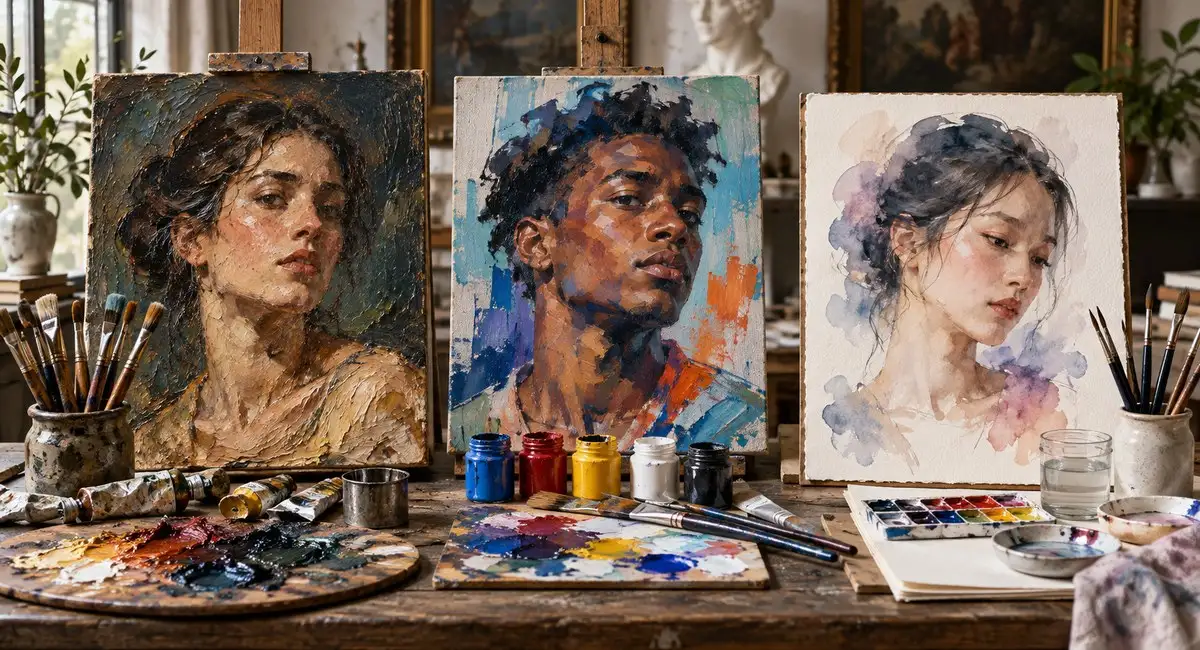
The medium an artist works in shapes a portrait’s final character as much as the composition itself. Oil paint allows for slow blending and layering, producing the soft transitions in skin tone and shadow that give traditional, classically rendered portraits their depth and richness, though it typically takes longer to complete and dry. Acrylic paint dries faster and allows for both fine detail and bold, confident brushwork, making it a versatile and increasingly popular choice for contemporary portrait commissions that want a slightly more immediate, energetic feel than a classical oil piece. Watercolor portraits trade some of that depth for a lighter, more luminous quality, often chosen for a softer, more delicate mood rather than a formal or monumental one. None of these mediums is objectively better, the right choice depends on whether you want your portrait to feel classical and richly layered or lighter and more contemporary.
Styles Within Portraiture
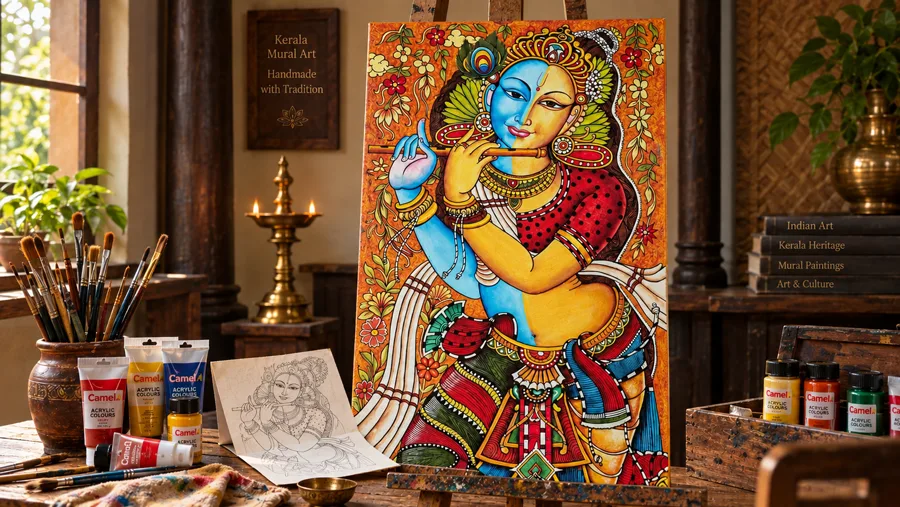
Realistic portraiture aims for close likeness and careful rendering of light, shadow, and feature, the classic, timeless approach most people picture when they hear the word portrait. Stylized or expressive portraiture takes more liberties with proportion, color, and brushwork while still keeping the subject recognizable, trading some precision for personality and mood. Cultural portraiture, a subject rendered in traditional dress or a regional artistic style, blends individual likeness with a broader visual heritage, adding a layer of narrative beyond the face itself.
Where Portraits Suit a Home
Living rooms and hallways are the most common home for a portrait, since both are spaces people move through and pause in, giving a painted face the chance to be noticed and appreciated repeatedly over time. A staircase wall works particularly well for a family portrait series, letting several generations sit together in one visual narrative as you move between floors. Bedrooms can hold a more intimate portrait, though it’s worth choosing a calm, gentle expression rather than an intense one if the piece will face the bed directly. A dining room can comfortably hold a formal or historical-feeling portrait, echoing the tradition of ancestral portraits hung in dining spaces for generations.
Single Portrait or Family Group
A single-subject portrait is the simplest and most forgiving place to start, easier to compose, easier to size, and easier to place well in most rooms. A family group portrait, two or more people in one composition, adds warmth and narrative but requires more planning, from choosing a reference photo where every subject is well lit and clearly visible to deciding on a larger canvas that gives each person enough presence. Multi-generational portraits, grandparents alongside grandchildren for instance, tend to carry particular emotional weight and make excellent centerpieces for a living room or staircase gallery wall. If budget or timeline is a constraint, it is often better to commission one strong single portrait now and add companion pieces over time than to rush a crowded group composition.
Color and Mood in a Portrait
Warm palettes bring a sense of intimacy and affection to a portrait, well suited to a family piece meant to feel loving and personal. Cooler or more muted palettes bring gravity and formality, often chosen for a more dignified or commemorative portrait. Background choice matters as much as skin tone here, a softly blurred or neutral background keeps all the attention on the face, while a detailed or symbolic background adds narrative but can compete with the subject if it’s overworked.
Sizing a Portrait
A close, face-and-shoulders portrait reads well at a moderate size, since the composition is already tightly framed and doesn’t need generous canvas to feel present. A fuller figure or a multi-person family portrait benefits from a larger canvas, giving each individual enough visual space to be seen clearly rather than crowded. As a rough guide, a solo close portrait works well starting around two to three feet in height, while a family group scales up from there depending on how many people are included.
Original vs Print for a Portrait
A portrait depends more heavily on subtle detail than almost any other genre, the precise curve of a smile, the specific warmth in someone’s eyes, details that carry enormous emotional weight and are exactly what a lower-quality print tends to flatten or lose. Because a portrait is so often tied to a specific, cherished person, most buyers find the investment in an original canvas, hand-painted rather than mechanically reproduced, worth the difference for a piece meant to be kept and passed down.
Framing a Portrait
A classic, timeless frame, wood tones or a warm gold, tends to suit realistic and formal portraiture especially well, echoing the tradition these pieces draw from. A more stylized or contemporary portrait can carry a simpler, minimal frame without losing its character. For a family portrait series displayed together, matching frames across all the pieces create a cohesive, gallery-like effect even if the individual paintings vary somewhat in style.
Budgeting for a Portrait Commission
Portrait commissions are generally priced by size and complexity, a close single-subject portrait costs less than a large multi-figure family composition, and finer, more detailed rendering takes longer than a looser, more expressive style. It is worth communicating your budget honestly with the artist upfront rather than after a composition has already been planned, since scope, canvas size, number of subjects, level of background detail, can usually be adjusted to fit different price points without compromising the quality of the likeness itself. A smaller, tightly cropped face-and-shoulders commission is a reasonable way to get a genuinely high-quality original portrait without committing to the cost of a large multi-person canvas.
Common Mistakes to Avoid
The most common mistake is providing a low-resolution or poorly lit reference photo and expecting the artist to somehow recover detail that simply isn’t there in the source image. The second is under-sizing a portrait meant to anchor a room, a small painting can feel more like a snapshot than a considered piece of art. The third is skipping a conversation about mood and tone before commissioning, leaving the final piece feeling generic rather than reflecting the specific warmth or formality you actually wanted.
Portraits as Memorial and Legacy Pieces
One of the most meaningful uses of portrait painting is as a memorial, a lasting, hand-painted tribute to someone who has passed, often commissioned from a treasured photograph that might otherwise remain tucked away in an album. Unlike a framed photograph, a painted memorial portrait carries a sense of intentional, considered attention, someone spent real time studying and rendering that person’s face, which many families find brings genuine comfort. These pieces are often given a place of particular honor in a home, a living room mantel, a hallway, or a dedicated spot in a family room, and they tend to become the kind of painting that gets passed down through generations rather than replaced or redecorated around.
Caring for a Portrait Canvas
Dust gently and regularly with a soft, dry cloth. Keep out of prolonged direct sunlight, since fine facial detail and skin tone are especially noticeable when fading occurs unevenly. Avoid high-humidity rooms and never apply cleaning products directly to a painted surface.
Displaying a Portrait Alongside Other Art
A portrait rarely needs to stand entirely alone, but it does generally benefit from a little visual space around it rather than being crowded by competing pieces. When displaying a portrait as part of a gallery wall, it’s worth treating it as the anchor rather than one equal element among many, giving it a slightly larger frame or a more central position so the eye naturally settles there first. Pairing a portrait with quieter, simpler pieces, a plain abstract, a soft landscape, tends to work better than surrounding it with other detailed or busy paintings, which can pull attention away from the face itself. For a family portrait series, consistent framing across the pieces does more to create a cohesive, considered look than matching every painting’s individual style.
Frequently Asked Questions
How long does a custom portrait commission take?
It varies by artist and complexity, but a hand-painted custom portrait generally takes several weeks from receiving the reference photo to a finished canvas.
What photo works best for a portrait commission?
A high-resolution, well-lit, front-facing or slightly angled photo with natural lighting and minimal shadow across the face.
Can a portrait be painted from an old or lower-quality photo?
Often yes, though results depend on how much detail is visible. It’s worth sharing the best available photo and discussing expectations with the artist beforehand.
Is a painted portrait a good gift?
Yes, it’s one of the most personal gifts available, particularly for milestones like anniversaries, retirements, or in memory of a loved one.
Can I request changes during a portrait commission?
Most artists share a preliminary sketch or draft stage before completing the final painting, giving you the chance to request adjustments to pose, expression, or detail before the piece is finished.
What’s the best medium for a formal, classical-feeling portrait?
Oil paint traditionally produces the softest, richest transitions in skin tone and shadow, making it the closest match to the classical portrait look, though a skilled artist can achieve a similarly refined result in acrylic.
Shipping and Delivery for a Custom Portrait
A finished custom portrait is typically shipped as a stretched, ready-to-hang canvas, carefully packaged to protect the painted surface and corners during transit. It’s worth confirming turnaround time upfront if the portrait is intended for a specific occasion, a birthday, an anniversary, a holiday, since hand-painted commissions naturally take longer than an off-the-shelf print and should be ordered with enough lead time to spare. Once it arrives, give the canvas a day or two to settle at room temperature before hanging, particularly if it has traveled through a very different climate than the one it was painted in.
The Takeaway
A portrait carries a kind of personal weight no other genre of painting quite matches. Choose a strong reference photo, be clear about the mood you want, size it generously, and a portrait becomes a piece that only grows more meaningful with time.
Explore our custom portrait painting service, hand-painted on canvas by our artists in India.