There’s a reason animal paintings never really go out of style, even while every other decor trend cycles through every few years. A tiger, a horse, a peacock — these subjects carry presence that a generic pattern or print just can’t match. They’re not neutral background decoration. They have character.
If you’re thinking about adding one to your home, here’s how to pick a piece that feels intentional rather than random, and where different animal subjects tend to work best.
Why Animal Art Works in Almost Any Home
Animal paintings tend to carry a mood you can name instantly — power, grace, playfulness, calm — which makes them easy to build a room around. Unlike abstract art, where the meaning is open to interpretation, an animal painting tells you what it’s about the moment you look at it. That directness is exactly what makes it work as a focal point.
There’s also a simple emotional reason animal art endures: most people have a genuine, personal connection to at least one animal, whether it’s a pet at home or a species they’ve always found fascinating. That connection gives the painting meaning beyond its color palette or composition, which is part of why animal art often becomes a household’s most talked-about piece.
It’s also worth considering how an animal painting ages with a room over time. Unlike trend-driven decor, a well-chosen animal subject tends to remain relevant regardless of shifting color palettes or design fads elsewhere in the house, since its appeal rests on the strength of the subject itself rather than on matching a particular moment in interior design.
Matching the Animal to the Mood You Want
Different animals read very differently on a wall, so it’s worth thinking about the feeling you want before the species.
- Big cats (tigers, lions) — power and drama, best for living rooms and entryways
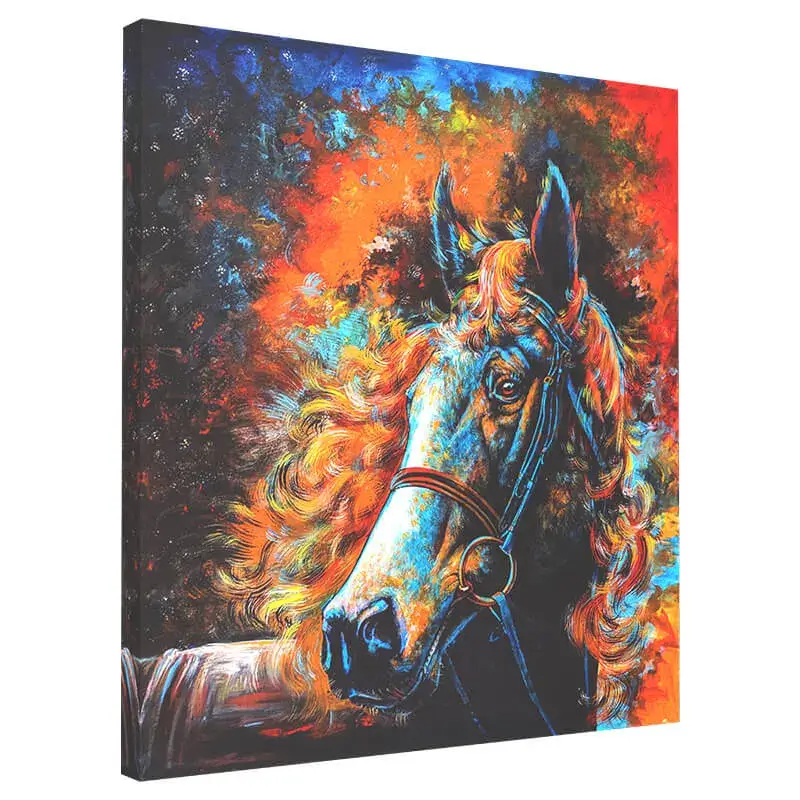
- Horses — energy and freedom, strong in hallways, offices, or above a console table
- Birds (peacocks, cranes) — elegance and grace, well suited to dining rooms and formal spaces
- Deer and forest animals — quiet and calm, ideal for bedrooms
- Dogs and pets — warmth and personality, great for casual family spaces
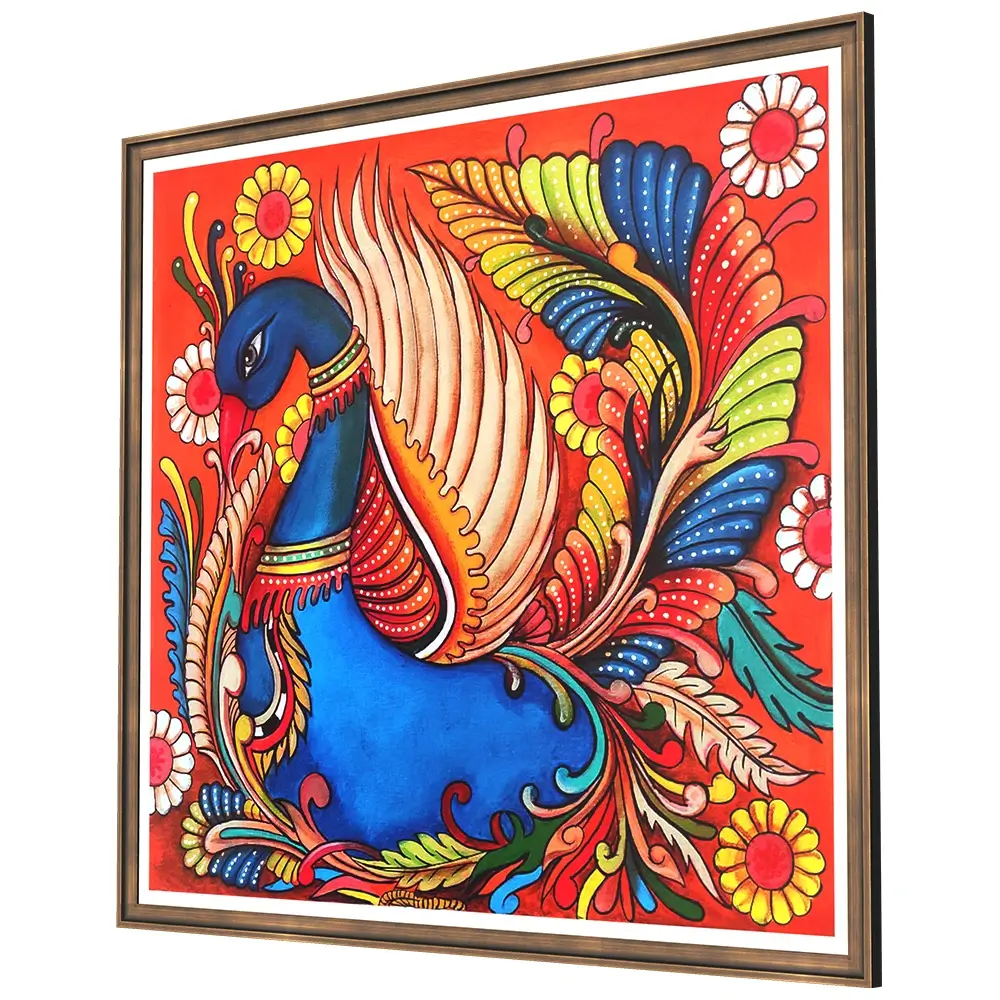
A peacock painting brings intricate detail and jewel tones into a room without needing anything else to complete the look — it’s a genuine centerpiece on its own.
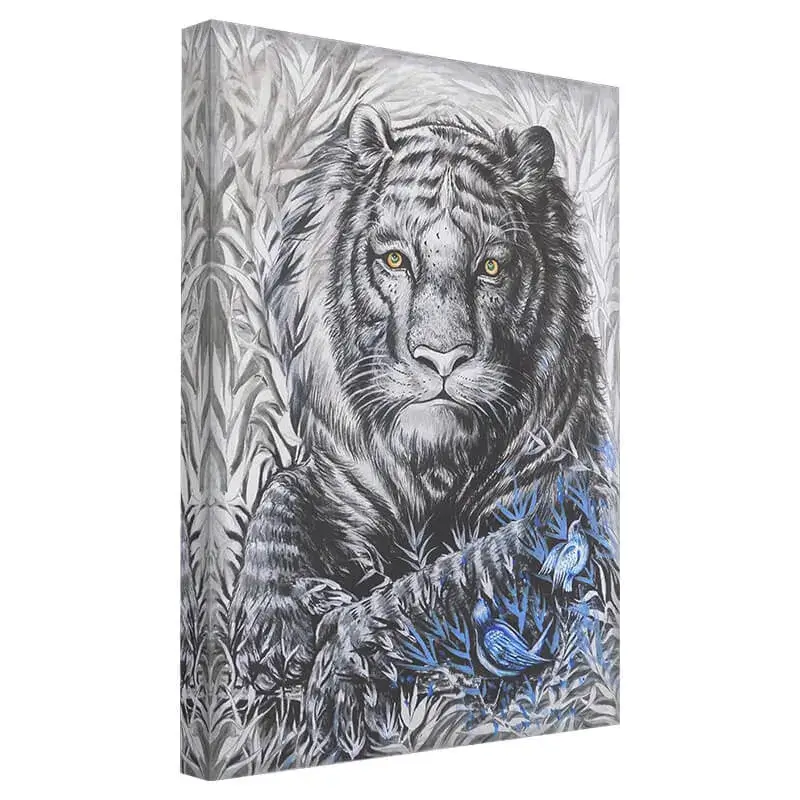

Wild Animals vs Domestic Pets: Two Very Different Moods
Wild animal paintings, tigers, lions, elephants, tend to project strength and majesty, which suits rooms meant to impress or make a statement, like a living room or entryway. Domestic animal paintings, dogs, cats, horses in pastoral settings, bring in warmth and familiarity instead, which is why they work so well in more casual, lived-in spaces like a family room or a child’s bedroom. Neither is more correct than the other; it really comes down to whether the room is meant to feel grand or comfortable.
A Closer Look at Popular Animal Subjects
Tigers and lions carry connotations of confidence and leadership, which is why they turn up so often in offices, studies, and living rooms meant to impress. Elephants symbolize wisdom, strength, and, in many households, good fortune, making them a popular choice for entryways and living rooms alike. Horses represent freedom and energy, and their dynamic poses translate especially well into large-scale paintings meant to fill a big wall with movement. Deer and forest animals bring a gentler, more contemplative mood, well suited to bedrooms and quiet reading corners. Birds, particularly peacocks, are prized for their color and detail, and they tend to work best where guests will actually get close enough to appreciate the fine brushwork.

Common Mistakes People Make with Animal Art
The most frequent mistake is choosing an animal painting purely because it looks impressive online, without considering whether its mood actually fits the room. A dramatic, intense tiger portrait can feel overwhelming in a small bedroom meant for rest, just as a soft, muted deer painting can get lost on a bold, high-energy living room wall. The second mistake is under-sizing; animal subjects, especially wildlife, tend to need scale to feel powerful rather than decorative. The third is ignoring the direction the animal is facing or looking, since a painting where the subject’s gaze leads out of the room, toward a doorway, for instance, can feel unintentionally awkward compared to one where the gaze draws inward.
A Quick Buying Checklist
- Choose the mood first (power, grace, calm, warmth), then narrow down the species
- Check the direction the animal faces and consider how that interacts with the room’s layout
- Size generously — wildlife subjects especially benefit from scale
- Decide between a realistic or stylized rendering based on the rest of the room’s design
- Confirm whether the piece is an original canvas if brushwork and texture matter to you
Placement Tips
Give animal paintings, especially the bold ones, room to command the wall on their own rather than crowding them with smaller frames nearby. Eye level for the center of the piece is roughly 145-150cm from the floor for most standard ceiling heights. If it’s going above furniture, keep 15-20cm of breathing room between the frame and the top of the piece below it.
Building a Room Around an Animal Painting
Once you’ve chosen the piece, let it guide the rest of the room rather than trying to match it to furniture you already own. Pull one dominant color from the painting, the deep teal in a peacock’s feathers, the warm chestnut of a horse’s coat, and repeat it in a cushion, a throw, or a small accessory nearby. This creates a visual thread between the art and the room without requiring you to redecorate everything else. Keep the wall around the painting relatively simple; a single strong animal subject rarely needs competing decor nearby to look complete.
Framing Animal Paintings
Frame choice can shift how formal or casual an animal painting feels. A dark wood or black frame lends gravity to a bold wildlife subject, suiting a study or living room meant to feel serious and grounded. A natural, lighter wood frame softens the same subject, making it feel more at home in a relaxed, family-oriented space. Gallery-wrapped canvases without any frame at all suit modern, minimalist interiors, letting the animal subject stand entirely on its own without a border competing for attention.
Animal Symbolism Across Cultures
Many animal subjects carry meaning that goes beyond visual appeal. In Indian art and decor traditions specifically, elephants are widely associated with wisdom and good fortune, peacocks with grace and the arrival of the monsoon, and horses with strength and prosperity. Even for buyers who aren’t drawn to the symbolism specifically, knowing the cultural weight behind a piece can add a layer of meaning that makes the painting feel like more than just a decorative choice.
Original Paintings vs Photography or Prints
Wildlife photography is everywhere, which is exactly why a hand-painted piece stands out more. An original painting interprets the animal rather than simply capturing it, and that interpretation — the brushwork, the color choices, the mood — is what turns a picture of an animal into a piece of art.
Caring for an Animal Painting
Dust regularly with a soft, dry cloth, moving gently in one direction rather than scrubbing at the surface. Keep the painting out of direct sunlight for extended periods, since fur, feather, and fine detail work can lose crispness as pigments fade over years of exposure. Avoid hanging near kitchens or bathrooms where humidity and grease can settle on the canvas surface over time, and never use household cleaning products directly on a painted surface.
Frequently Asked Questions
What animal painting works best for a living room?
Big cats and horses tend to work best for a living room, since these rooms usually call for a bold, confident statement piece that can anchor the whole space.
Are bird paintings only suitable for formal rooms?
Not at all. While peacocks and cranes lean formal and elegant, smaller, more playful bird paintings work well in casual spaces too, especially bedrooms and reading corners.
Can I commission a painting of my own pet?
Many art studios, including ours, take custom pet portrait commissions. It’s worth reaching out directly if you want a painting of a specific animal rather than choosing from an existing collection.
How do I choose between a realistic and a stylized animal painting?
Realistic paintings suit more traditional or formal rooms, while stylized or abstract animal art fits better in a modern, minimalist space. Consider the rest of the room’s design language before choosing.
Do animal paintings work in modern, minimalist homes?
Yes, especially stylized or monochrome versions. A minimalist space actually benefits from a single strong animal subject, since it gives the eye a clear focal point in a room that’s otherwise deliberately spare.
Should the animal painting match my other decor colors exactly?
Not exactly, but it helps if there’s some connection. Pulling one color from the painting into a cushion, rug, or accessory nearby ties the piece to the room without requiring an exact color match everywhere.
Final Thought
Animal paintings are one of the easiest ways to add real character to a home, precisely because the subject already does half the emotional work. Pick the mood you want, match it to the right animal, and give the piece the space it deserves.
Explore our full range of animal paintings, hand-painted on canvas by our artists in India.