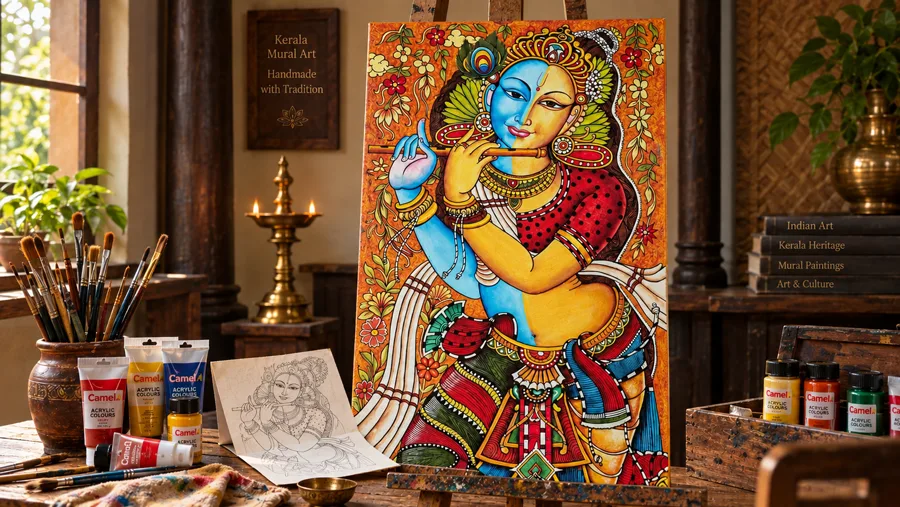

Most art borrows its subject matter from the real world: a landscape, a face, a bowl of fruit. Fantasy and surreal painting does something entirely different. It builds a world that couldn’t exist: fish soaring through starlit skies, goddesses drifting among planets, animals with wings where none belong. For a home that wants a piece with genuine imagination and a little wonder, this is one of the most rewarding genres to explore.
Here’s what defines the style, and how to bring it into a room without it overwhelming the space.
What Makes a Painting Fantasy or Surreal
Surrealism is built on unexpected juxtaposition. It combines familiar elements in impossible ways. This bypasses rational logic and speaks to imagination. Fantasy painting overlaps but leans toward invented worlds and mythic imagery. Think cosmic scenes, mythical creatures, and dreamlike landscapes. In practice, the line blurs constantly. A flying fish in a starlit ocean sky is both surreal and fantastical. Both share a refusal to match how things actually look. That’s exactly the point.
A Brief History of Surrealism and Fantasy Art
Surrealism emerged as a formal movement in the 1920s. It grew from fascination with dreams and the subconscious. Rational logic wasn’t the only way to represent reality. Painters borrowed techniques from earlier traditions. They deliberately broke the rules. They placed ordinary objects in impossible settings, distorted scale, and blended unrelated imagery. Fantasy art has different roots in mythology, folklore, and invented worlds. Both traditions have merged in contemporary painting. Cosmic, mythic, and dreamlike imagery are now treated as one toolkit. Both traditions share the same underlying appeal: permission to paint what imagination creates, not what observation shows.
Why Fantasy and Surreal Art Works So Well as a Statement Piece
This genre depicts something no one has seen. It carries automatic imagination and originality. Representational styles can’t match this.There’s no real-world reference to compare. The painting exists on its own terms. It holds attention longer than landscapes or still lifes. There’s more to notice and interpret. Impossible details and unexpected colors reward long looking. For anyone wanting a conversation-starting painting, this genre is one of the most reliable choices.
Styles Within Fantasy and Surreal Art
Cosmic and celestial surrealism places figures among stars and planets. It blends the mythic with the astronomical for wonder and scale. Dreamlike nature surrealism bends natural world rules. Animals appear in impossible settings in colors that don’t exist in nature. Yet it still feels recognizably organic. Narrative surrealism builds small implied stories. It invites viewers to interpret what’s happening in the scene. Each leans toward a different mood. Cosmic work feels expansive. Nature work feels playful. Narrative work feels contemplative.

Underwater and Marine Fantasy: A Popular Sub-Style
Underwater and marine fantasy is one of the most popular corners of this genre. Fish and sea creatures swim through starlit skies, cosmic oceans, or vividly colored coral worlds. The ocean already carries mystery and the unknown in reality. This makes it a natural subject for surreal art without feeling forced. This sub-style works exceptionally well in coastal or nature-adjacent homes. An imaginative ocean piece feels like an extension of a home’s connection to water and nature. Vivid blues, teals, and iridescent colors dominate. They bring a cooling, expansive quality into the room alongside a sense of wonder.

Where Fantasy and Surreal Art Suits a Home
Living rooms handle bold fantasy pieces especially well. The room is built for gathering and conversation. This genre guarantees both. A study or creative workspace benefits from smaller, contemplative pieces. They reward a wandering eye during breaks without becoming distracting. Children’s rooms suit the whimsical end perfectly. Flying creatures and dreamlike colors delight rather than unsettle. They fit poorly in formal dining rooms or minimalist bedrooms. The high visual energy competes with calmer moods.
Color in Fantasy and Surreal Work
Vivid, saturated color is common in this genre. Deep cosmic purples, blues, and glowing neons create its otherworldly feel. That said, muted or monochrome surrealism exists too, and can feel more haunting or contemplative than a color-saturated piece, trading vibrancy for atmosphere. Consider the existing color palette of the room before committing to an intensely saturated fantasy piece, since it will almost always become the dominant visual anchor of the space rather than blending quietly into the background.
Pairing Fantasy Art with the Rest of a Room
Fantasy and surreal pieces are often the boldest room element. Keep furniture and decor simple. Let the painting carry the visual complexity. A neutral wall color—white, soft grey, or warm beige—lets its color read clearly. Patterned or richly colored walls can compete with complex compositions. If you own other art, build the room around one strong fantasy piece. Let quieter paintings support it elsewhere. Avoid balancing two equally bold pieces in one sightline.
Sizing a Fantasy or Surreal Piece
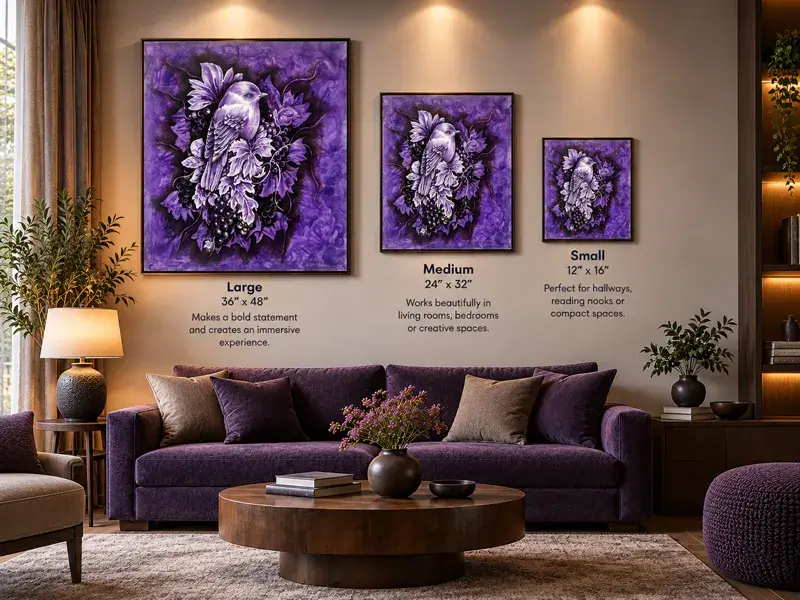
This genre generally rewards scale, a large canvas gives an impossible, imaginative scene the room it needs to feel genuinely immersive rather than like a small window into another world. A modestly sized fantasy piece can still work well in a smaller space like a hallway or reading nook, but it’s worth accepting that some of the genre’s most powerful effect, the sense of being pulled into another reality, depends partly on scale.
Original vs Print for Fantasy Art
Fantasy paintings rely on subtle gradients and glowing light effects. Lower-quality prints flatten these into blocky bands. An original canvas retains the hand-built depth of these gradients in a way that gives cosmic and dreamlike scenes their genuine sense of atmosphere and light. For a genre this dependent on color depth and subtle transition, the difference between an original and a mass-produced print is often more visible here than in almost any other style.
Framing Fantasy and Surreal Paintings
A simple, minimal frame, or no frame at all, tends to suit this genre best, letting the painting’s imagined world extend visually to its edges without an ornate boundary breaking the illusion. A slim black or dark metal frame can add a clean, gallery-like edge to a cosmic or dreamlike piece without competing with its color and detail.
Lighting a Fantasy or Surreal Painting
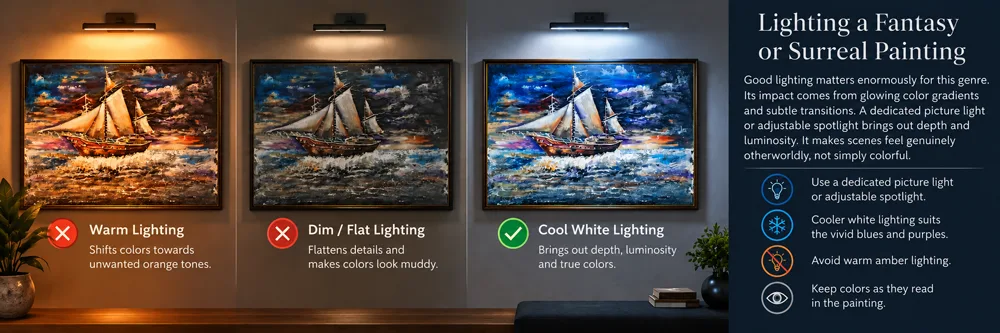
Good lighting matters enormously for this genre. Its impact comes from glowing color gradients and subtle transitions. Flat, dim lighting flattens these into muddy tones. A dedicated picture light or adjustable spotlight brings out depth and luminosity. It makes scenes feel genuinely otherworldly, not simply colorful. Cooler white lighting suits the vivid blues and purples. Warm amber shifts colors toward unwanted orange. Keep colors as they read in the painting.
Common Mistakes to Avoid
The most common mistake is under-sizing immersive pieces. Shrinking scale and wonder creates novelty, not a genuine statement. The second mistake is placing saturated, high-energy pieces in calm rooms. Visual intensity works against restful moods.The third is over-framing imaginative pieces. Heavy, ornate frames undercut the sense of limitless imagined space the painting creates.
Fantasy Art as a Gift for the Imaginative
For creative people, fantasy paintings are more memorable than safer pieces. It signals you noticed and honored their imagination specifically. A cosmic piece suits someone drawn to astronomy. A whimsical animal fantasy suits someone with playful humor. This genre is visually distinctive. It becomes a genuine talking point when guests visit. Not every gift can claim that.
Caring for a Fantasy or Surreal Canvas
Dust gently and regularly with a soft, dry cloth. Keep out of direct sunlight for extended periods, since deeply saturated colors and subtle gradients are especially prone to visible fading over time. Avoid high-humidity rooms, and never apply cleaning products directly to a painted surface.
Fantasy Art and Personal Taste Over Time
Because fantasy and surreal paintings tend to be bolder than generic art, consider your confidence level before committing to a large, saturated centerpiece. Start with a moderately sized piece in a lower-stakes room like a study, hallway, or guest room. This lets you live with the genre first. Then decide whether to go bolder in central spaces like the living room. Unlike generic decorative art, striking fantasy pieces age well. Their appeal comes from imagination and craft, not trend. Most owners grow more attached to these works over time rather than tiring of them.

Frequently Asked Questions
What’s the difference between fantasy art and surreal art?
Surreal art is built on impossible juxtaposition of familiar elements to challenge rational logic. Fantasy art leans more toward invented, mythic worlds. In practice the two overlap constantly and are often used interchangeably.
Is fantasy art too bold for a small home?
Not necessarily, a smaller or more muted fantasy piece can work well in a compact space. The key is matching scale and color intensity to the room rather than avoiding the genre entirely.
Does fantasy art suit a children’s room?
Often yes, particularly whimsical, playful pieces featuring flying creatures or dreamlike color, which tend to delight rather than unsettle in a space built around imagination.
How do I keep a fantasy piece from clashing with the rest of my decor?
Keep surrounding furniture and wall colors relatively simple and neutral, and let the painting itself carry the room’s visual complexity rather than competing with an equally busy space.
Is underwater or marine fantasy art a good starting point for this genre?
Yes, it tends to feel slightly more approachable than fully cosmic or mythological work while still delivering the genre’s characteristic sense of imagination and wonder.
Original vs Mass-Produced Fantasy Art
Fantasy and surreal imagery is everywhere in mass-market decor. Cheap canvas prints and poster art with generic themes saturate the market. What separates worthwhile pieces from generic decor is originality and hand-painted depth. Factory-printed designs cannot replicate this quality. Original fantasy paintings hold impact and value better than mass-produced pieces. They build on the artist’s own imagined world, not stock designs. If this genre appeals to you, prioritize craft and originality. Treat it like any other original painting purchase, not simply visual decoration.
The Takeaway
Fantasy and surreal painting offers something no other genre quite does, a world that exists only on the canvas. Choose a sub-style and color intensity that match your room’s mood, size it generously, and it becomes the piece everyone in the house notices something new in, months or years after it first went up.