A landscape painting is one of the oldest, safest choices in art — which is exactly why it’s easy to underestimate. Done well, a landscape doesn’t just fill a wall. It changes the apparent size and mood of a room, sometimes more than a coat of paint or a new sofa would.
Here’s how to actually use that effect, instead of just picking whatever scenery looks nice in a thumbnail.
Landscapes Create the Illusion of Space
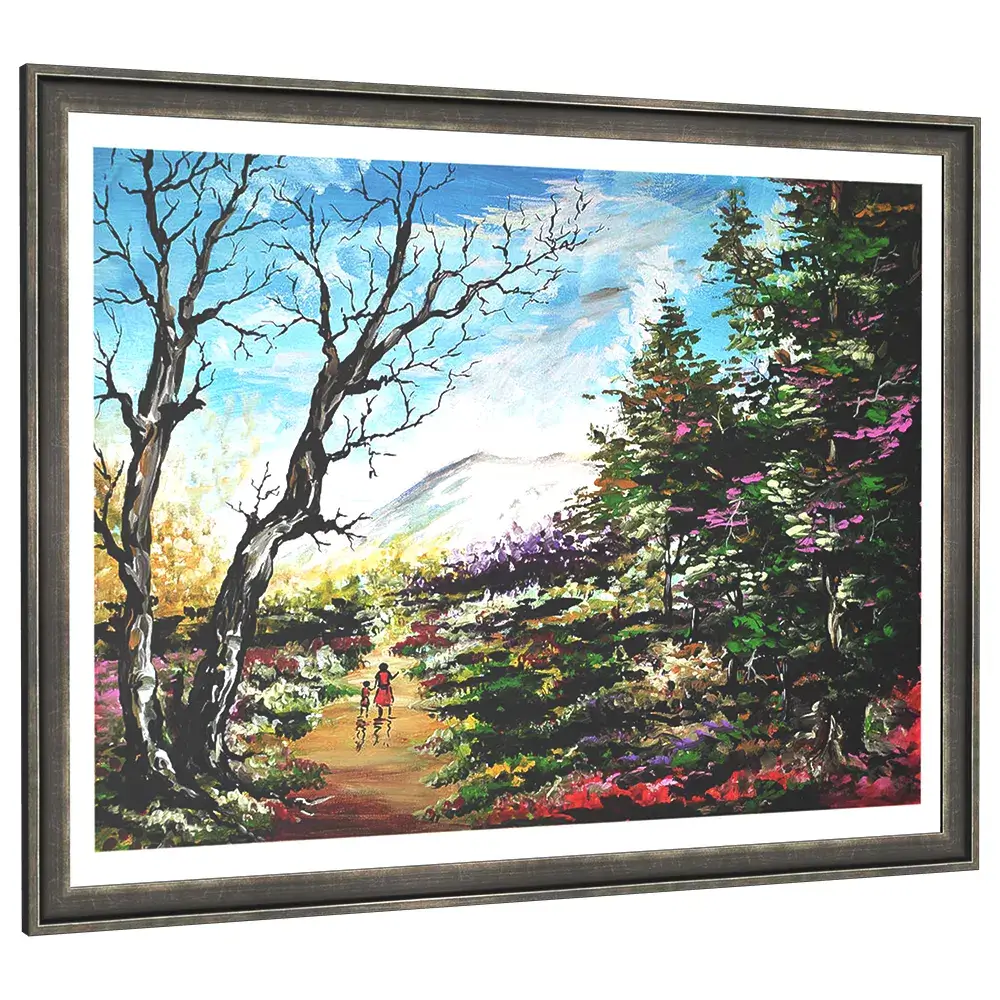
A painting with depth — a horizon, a receding path, a mountain range in the distance — tricks the eye slightly. It reads almost like a window, which makes a small room feel less enclosed than it actually is. This is one reason landscape paintings are so often recommended for apartments, studios, and any room without much natural light.
It’s also worth thinking about how a landscape painting interacts with the actual view outside your windows, where you have one. In a room with a genuinely nice outdoor view, a landscape painting on an adjacent wall can extend that feeling of openness rather than compete with it. In a room with no view at all, the painting essentially becomes the window, which is exactly why choosing the right depth, light, and mood for that piece matters more than it would in a room that already has plenty of natural scenery to look at.
Why This Illusion Actually Works
The effect comes down to how the eye reads depth cues. A painting where objects get smaller and hazier toward a distant point, a technique painters call atmospheric perspective, tricks the brain into perceiving real spatial depth, even though the wall itself is flat. A path or river leading into the distance reinforces this further by giving the eye a specific route to follow into the scene. The stronger these depth cues are in a painting, the more convincingly it can make a room feel larger or more open than its actual dimensions.
Match the Scene to the Room’s Purpose
Not every landscape suits every room, and this is where most people get it wrong — they choose based on which painting they personally like most, without considering how the room is actually used.
- Living room: Wide, open scenes — lakesides, mountain views — work well since these rooms are meant to feel expansive and social.
- Bedroom: Soft, dusk or dawn-toned scenes with muted color support rest rather than energy.
- Dining room: Scenes with warmth — golden light, autumn color — tend to suit the social, unhurried mood of a meal.
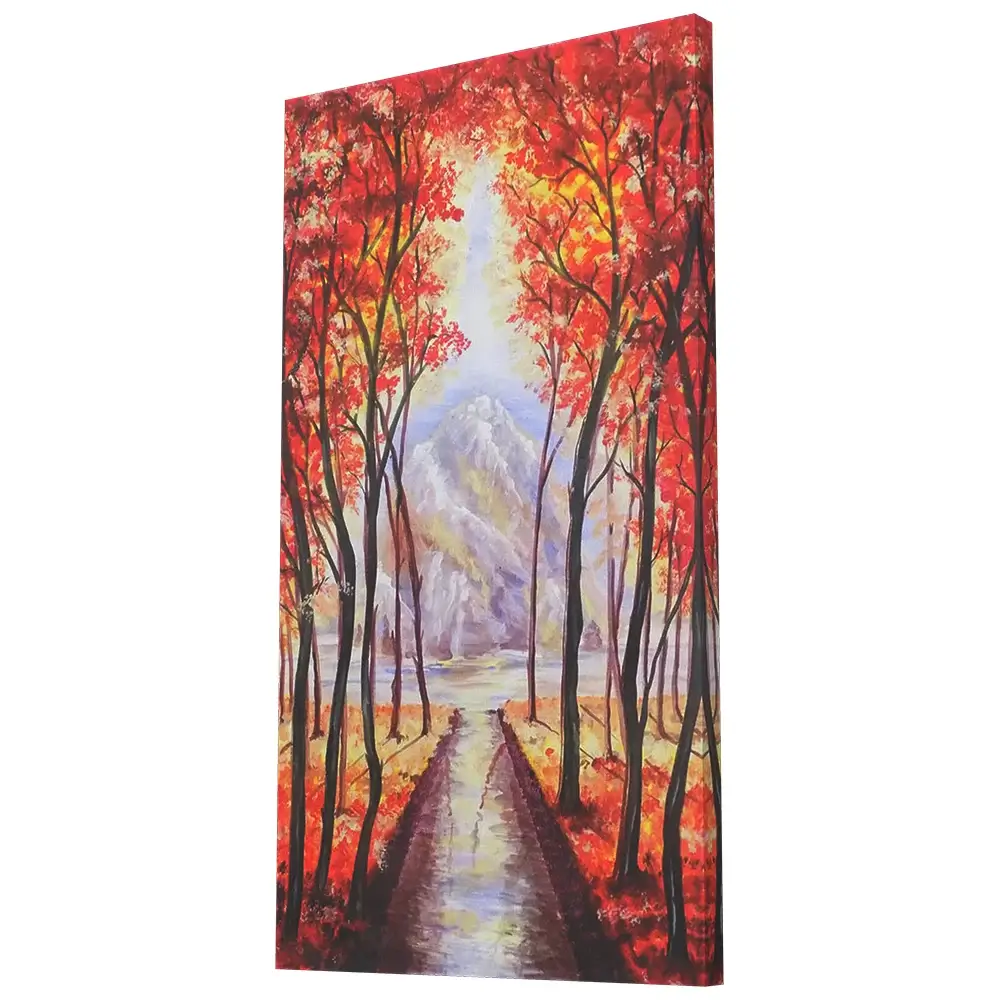
- Hallway: A path or river leading into the distance echoes the sense of movement already happening in that space.

Understanding Landscape Types
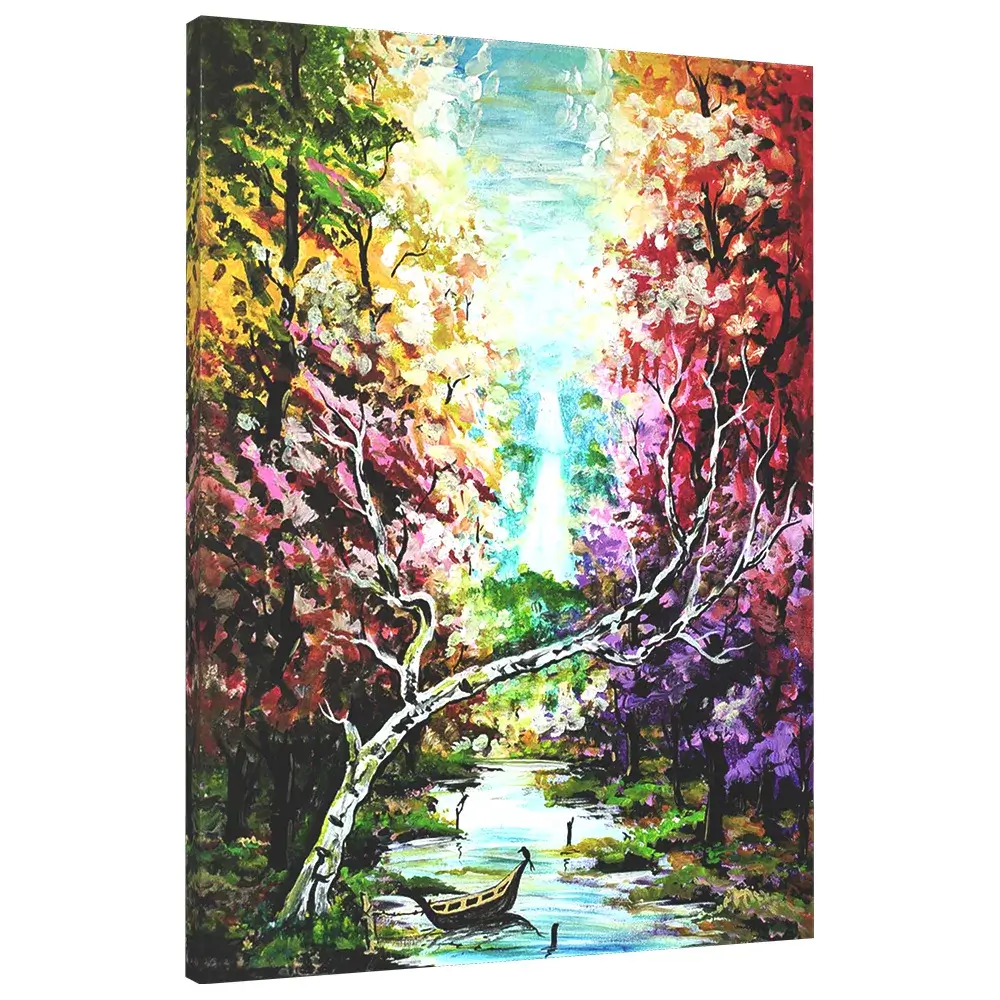
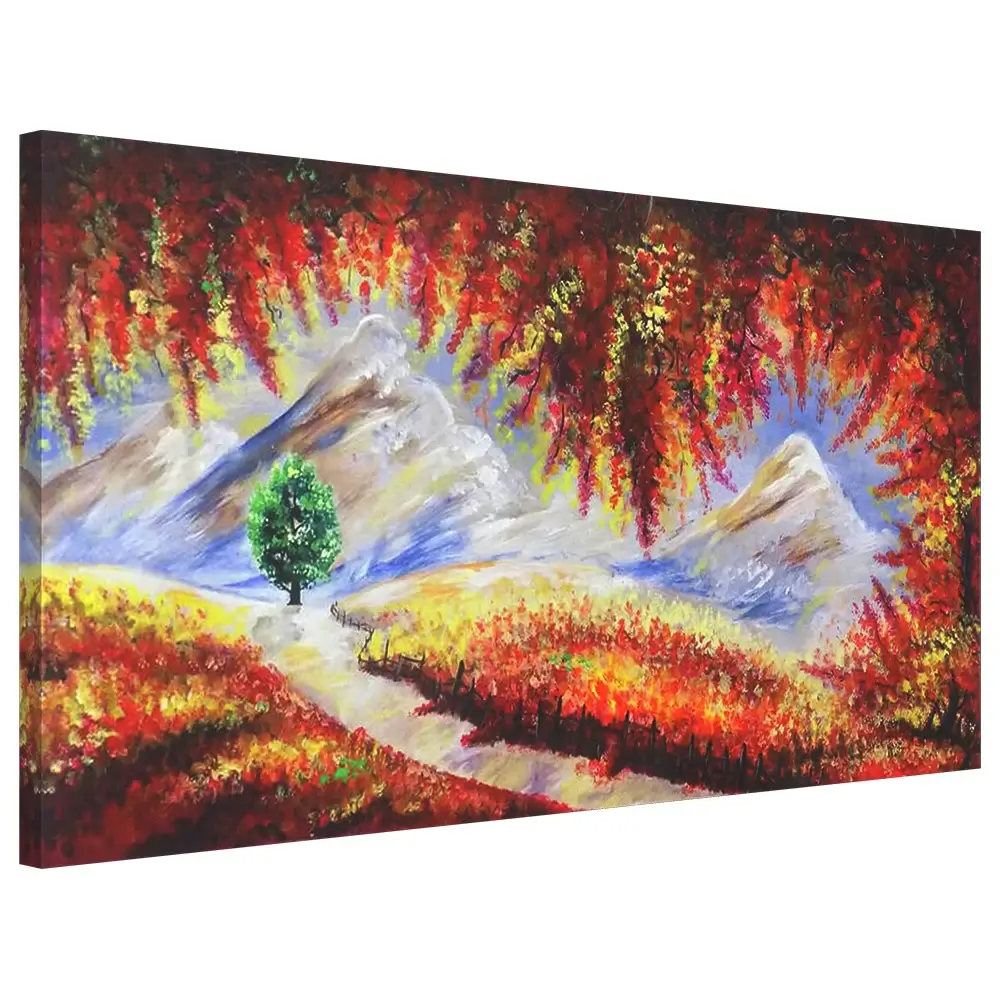
Forest scenes feel intimate and sheltered, ideal for cozy bedrooms and reading nooks. Water scenes, lakes, rivers, seas, feel open and social, better suited to living and dining areas. Mountain landscapes carry a sense of scale and grandeur that works especially well in larger rooms or home offices where a feeling of expansiveness supports both relaxation and focused thinking. Waterfall scenes combine movement with nature, offering more visual energy than a still lake while remaining calmer than a stormy seascape, making them a versatile middle ground for almost any room.
Orientation and Wall Shape
Most landscapes are wide, horizontal compositions, which is great for a sofa wall but awkward on a narrow stretch beside a doorway. A vertical landscape — a tall waterfall, a forest path shot from ground level — solves that problem and is worth seeking out specifically rather than forcing a wide painting into a narrow space.
One Large Piece vs a Series
Both work, but they do different jobs. A single large landscape becomes the room’s anchor — the thing your eye goes to first. A series of two or three smaller, related scenes creates a narrative across a wall, which suits longer hallways or staircases better than a single piece would.
Color Temperature and Time of Day
The time of day depicted in a landscape changes its emotional register almost as much as the subject itself. Bright midday scenes feel energetic and clear, suiting kitchens and home offices where alertness matters. Golden hour and sunset scenes bring warmth and a slower, more relaxed mood, fitting well in living rooms and dining spaces. Dusk, twilight, and moonlit scenes feel quiet and restful, which is why they’re such a natural fit for bedrooms specifically, more so than any brighter alternative.
Pairing Landscape Art with Furniture and Textiles
A landscape painting works best when the room’s furniture doesn’t try to compete with its color story. Pull one or two dominant tones from the scene, the deep green of a forest, the warm gold of an autumn meadow, and echo them subtly in a cushion, rug, or throw nearby. This creates a visual thread between the painting and the room without requiring an exact color match everywhere. Textured furnishings, linen, wool, raw wood, tend to suit landscape art better than glossy, high-shine surfaces, since both share a grounded, natural quality.
Landscape Art Through the Seasons
Unlike some decor elements that get swapped seasonally, a landscape painting is usually meant to be a permanent fixture rather than something rotated with the weather outside. That said, some households do enjoy matching the painting’s season loosely to the time of year, an autumn scene through the cooler months, a lush green forest in spring and summer, though this is entirely a matter of personal preference rather than a rule. If you’d rather not rotate art, choosing a landscape with a fairly neutral or timeless setting, like a calm lake or a forest path, avoids the question entirely, since these scenes read as appropriate year-round.
Original vs Print for Landscape Art
Landscape paintings rely on subtle gradation, the soft transition from a bright sky to a darker horizon, the gentle blur of distant trees, to create their sense of depth. Lower-quality prints often flatten these transitions, which can genuinely undermine the illusion of space that makes a good landscape painting work in the first place. An original canvas, painted with real light and shadow rather than reproduced photographically, tends to preserve that depth far more convincingly.
Caring for a Landscape Canvas
Dust regularly with a soft, dry cloth, moving in one direction. Keep the painting away from direct, prolonged sunlight, which can fade greens and blues faster than other colors. Avoid hanging near heat sources like radiators or fireplaces, and keep humidity in mind if the piece is going in a kitchen or near a bathroom, since moisture can subtly warp a canvas over time.
Common Mistakes to Avoid
The most frequent mistake is buying a landscape purely because the scene is beautiful, without considering whether its mood fits the room. A dramatic, stormy seascape might be visually stunning but wrong for a bedroom meant for rest. The second is underestimating scale, a small landscape on a large wall loses the very depth effect that makes the genre so effective in the first place, since there isn’t enough size for the eye to genuinely feel drawn into the scene. The third is ignoring orientation, forcing a wide horizontal painting into an awkward narrow space instead of seeking out a vertical composition that actually fits.
Framing a Landscape Painting
Natural wood frames complement landscape subjects particularly well, echoing the organic quality of the scene itself. Simple black or white frames work in more contemporary settings, providing clean contrast without competing with the painting’s colors. Ornate, gilded frames can suit very traditional interiors but risk overwhelming a naturalistic scene, so they’re best reserved for landscapes with a more classical, formal composition.
A Quick Buying Checklist
- Decide on the mood first (calm, social, energetic) before browsing by scenery type
- Check whether the wall calls for a horizontal or vertical composition before choosing a piece
- Consider the time of day depicted and how it matches the room’s use
- Size generously; small landscapes lose the depth effect that makes the genre work
- Choose a frame style that complements rather than competes with the scene
Frequently Asked Questions
What size landscape painting works best above a sofa?
Aim for roughly two-thirds to three-quarters of the sofa’s width. For a standard three-seater around 200cm wide, a painting in the 120-150cm range usually looks proportionate.
Do landscape paintings work in modern, minimalist homes?
Yes, particularly simpler compositions with a limited color palette and strong depth cues, like a single path or a calm lake, rather than busy, highly detailed scenes.
Should I choose a realistic or more stylized landscape?
Realistic landscapes suit traditional and transitional interiors, while stylized or painterly landscapes with visible brushwork fit better in contemporary or eclectic spaces.
Can a landscape painting really make a room feel bigger?
To a meaningful degree, yes, especially one with strong depth cues like a distant horizon or a receding path, since these create a genuine sense of visual space that a flat pattern or abstract piece can’t replicate in the same way.
Can two different landscape paintings work in the same room?
Yes, as long as they share a similar color palette or time-of-day mood. Two landscapes with wildly different lighting, one bright midday and one dark twilight, can make a room feel visually disjointed rather than cohesive.
Is a mountain scene or a forest scene better for a home office?
Both work well, but for different reasons. Mountain scenes bring a sense of scale that some people find supports big-picture thinking, while forest scenes feel more sheltered and suit deep, focused work. Choose based on which type of work you do more often.
The Takeaway
A landscape painting is never just “nice scenery.” Chosen with the room’s mood and shape in mind, it can genuinely change how a space feels to spend time in — bigger, calmer, warmer, whatever the room needs most.
Explore the full landscape painting collection, hand-painted on canvas by our artists in India.