
Most home offices get decorated as an afterthought. A desk, a chair, maybe a plant if someone remembers. The walls stay bare, or worse, get whatever leftover print didn’t fit anywhere else. That’s a missed opportunity.
That’s a missed opportunity. The art in a workspace isn’t just decoration. It affects how the room feels to sit in for eight hours a day. Some paintings help you settle in and focus. Others quietly work against you. Here’s how to tell the difference.
Why the Right Painting Matters More Than People Think
A home office is a room you look at, not just sit in. Unlike a living room, workspace walls are in your peripheral vision. You see them constantly for hours at a stretch. That constant exposure matters. A poorly chosen painting can irritate or distract you more than almost any other piece in the office..
What to Avoid in a Home Office
Skip anything chaotic or visually loud in your line of sight. Busy compositions pull attention rather than hold it. Be careful with emotionally heavy or intense art facing your desk. It’s fine on a wall you pass by. It’s less fine when you stare at it during a difficult email.
Avoid very small art in a home office too. A tiny painting near a monitor tends to disappear. This defeats the purpose of having it.
What Actually Works
Three categories work well: calm landscapes, focused abstracts, and paintings with open space.
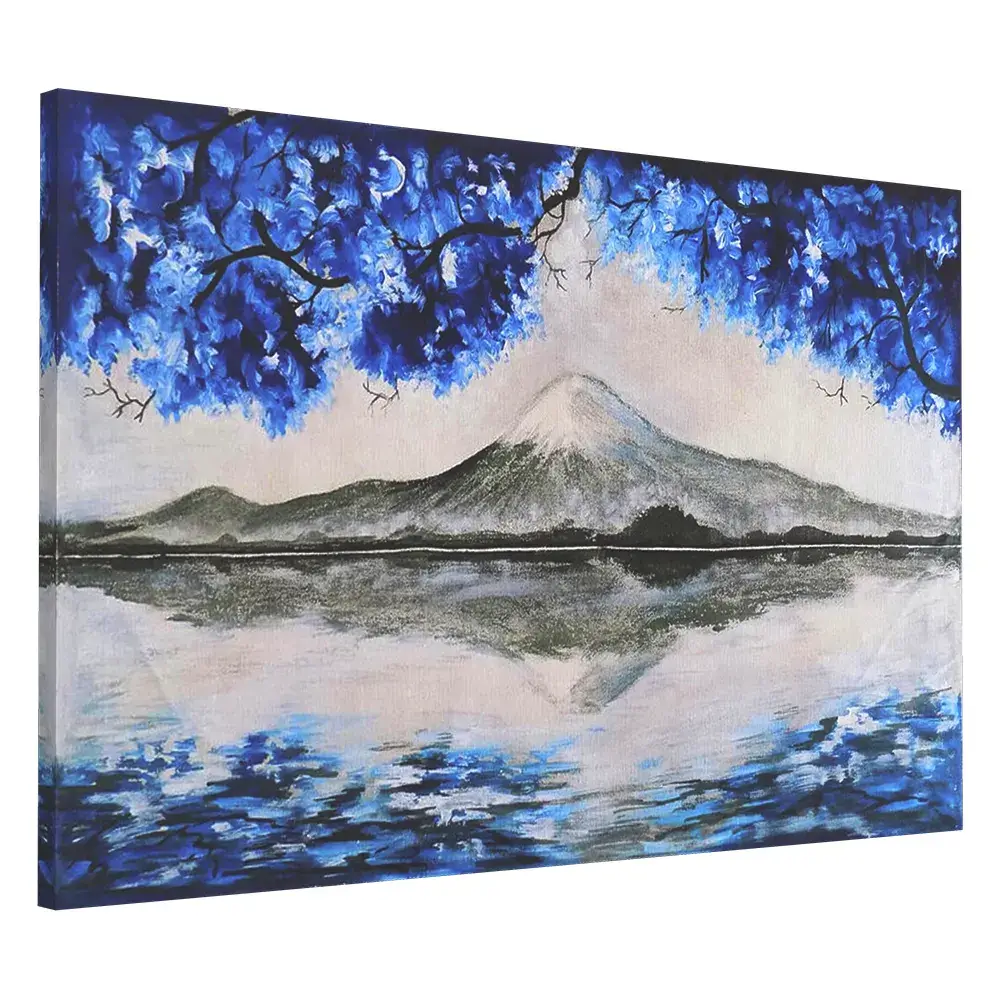
A landscape view substitutes for a window facing a mountain. It gives your eyes somewhere to rest between tasks.
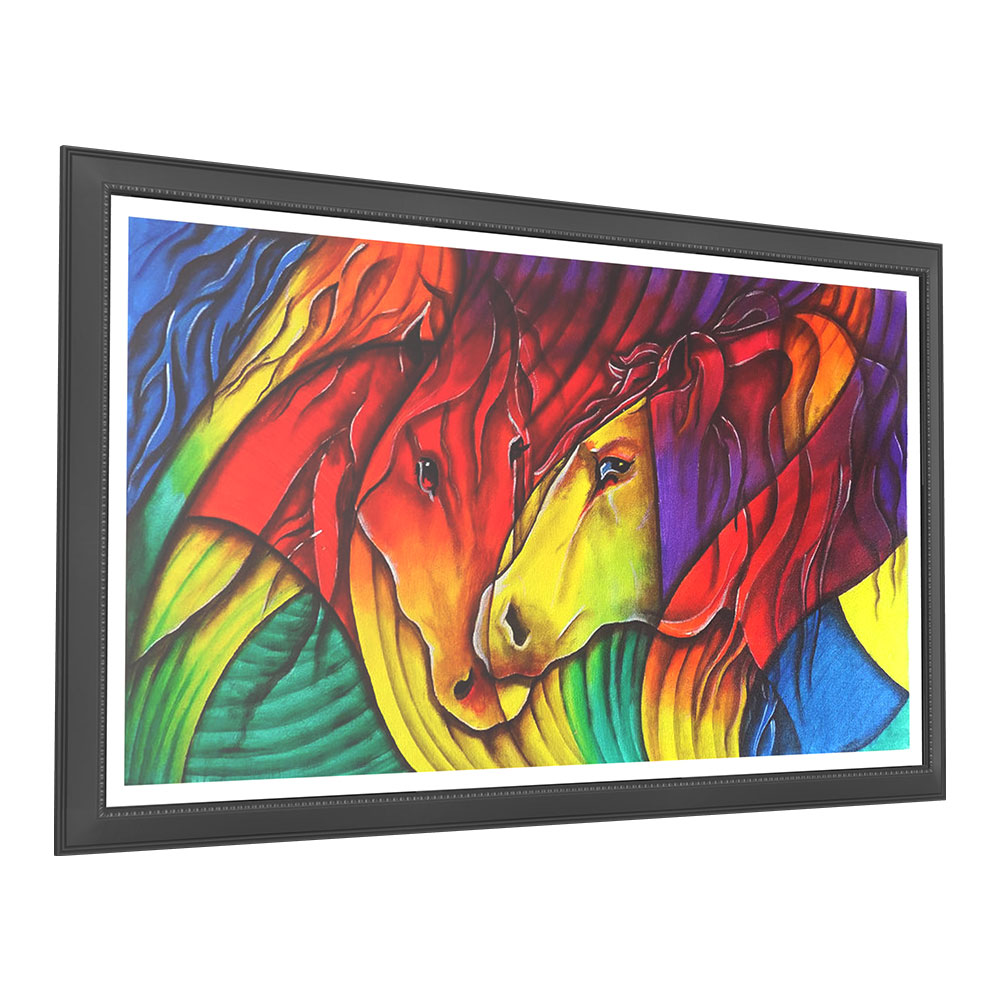
Abstract pieces like this work because there’s no “story” to get pulled into. You can glance at it without losing focus. A narrative painting might make you keep looking.
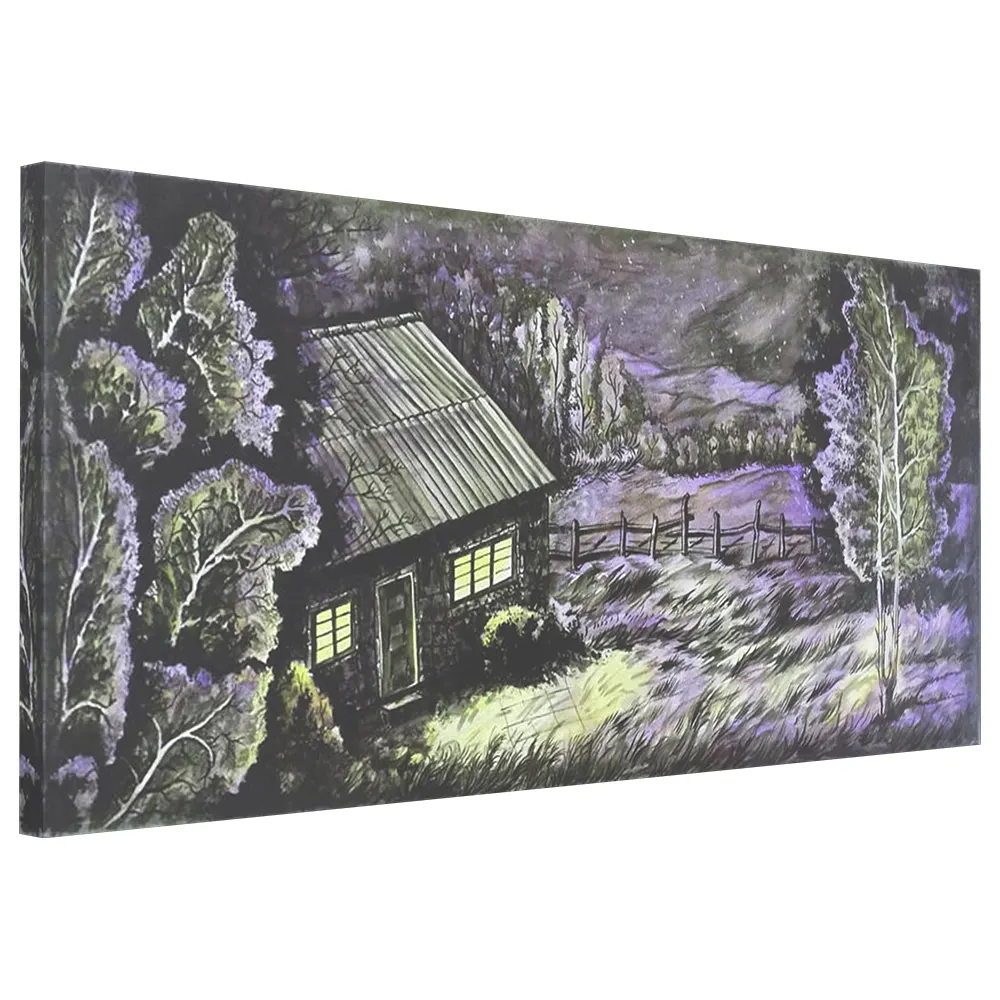
Matching the Painting to the Type of Work You Do
Not every office does the same work. The right painting shifts based on what you do. If your work involves deep writing or analysis, choose quiet landscapes or color-field abstracts. These support sustained concentration better. If your role is more collaborative and call-heavy, a painting with a bit more personality, like a striking animal portrait or a bold but simple abstract, gives colleagues something to notice and comment on during video calls, which can be a small but genuine icebreaker. Creative work, on the other hand, often benefits from something a touch more unexpected — a surreal or fantasy-leaning piece can nudge the mind toward looser, more associative thinking during a brainstorm.
Placement Matters More Than You’d Think
Where you hang the piece changes how it functions. A painting directly behind your webcam becomes part of every video call, so keep that one simple and uncluttered. A painting beside your desk can carry more detail. You glance at it during pauses, so detail works better here.
Also consider what’s directly behind you on camera versus what’s in your own eyeline. These require two different paintings. Treat them separately instead of picking one for both jobs.
Size and Scale for Smaller Rooms
Home offices are often smaller rooms, which makes people default to small art. That’s usually backwards. One medium-to-large painting reads as intentional; several tiny ones in a small room can make the space feel cluttered and busier than it already is with cables and paperwork. As a rough guide, a painting roughly 60-90cm wide works well for most standard home office walls without overwhelming the desk setup beneath it.
Color Choices for Focus vs Energy
Cooler tones like blues and greens support sustained focus. They suit long work sessions. Warmer tones bring energy. They counter the flatness of a room used the same way every day. If you need both modes, choose one painting for the main wall. Use smaller accessories to introduce the other tone.
Lighting Your Home Office Art
Good lighting does double duty. It makes the art look better and improves the room’s light. Both fight eye strain from screens. A warm-toned lamp near the painting, rather than a single harsh overhead light, tends to make both the art and the room feel more comfortable over a long day.
Common Mistakes to Avoid
The most common mistake is treating the home office as the last room in the house to get decorated, which usually means whatever leftover art happens to be on hand ends up on the wall regardless of whether it suits the room’s actual purpose. The second is hanging art too high, above eye level, simply because there’s empty wall space up there, when it would serve you better positioned where you’ll actually look at it while seated. The third is choosing art based purely on how it looks in a product photo rather than how it will feel to sit across from for hours — a piece that seems striking for thirty seconds in a shop can become genuinely tiring after the hundredth glance during a long call.
Pairing Art with Plants and Other Office Decor
A painting rarely needs to work alone in a home office. A landscape or nature-themed piece pairs naturally with a real plant nearby, reinforcing the same calming effect through two different senses at once. An abstract piece works well against a simple, uncluttered shelf rather than one crowded with books and folders, since the painting needs some visual breathing room to actually register as a design choice rather than just more stuff on the wall.
A Quick Buying Checklist for Office Art
- Decide what kind of work you do most and choose calm or energetic tones accordingly
- Measure your desk wall and the wall behind your webcam separately — they may need different pieces
- Avoid anything with a strong narrative or emotional intensity directly in your line of sight
- Size up rather than down; small art tends to disappear next to monitors and desk equipment
- Plan the lighting for the painting at the same time as the rest of the room’s lighting
Frequently Asked Questions
Should the painting behind me on video calls be different from the one I look at?
Ideally, yes. The wall behind you on camera should be simple and uncluttered since it’s seen by other people constantly. The wall in your own eyeline can carry more detail since you’re the only one really studying it.
Is it better to have one large painting or several small ones in a home office?
One larger piece almost always works better in a home office, since several smaller pieces add visual clutter to a room that’s often already busy with cables, monitors, and paperwork.
Can bold, colorful art work in a home office, or should I stick to calm pieces?
It depends on your work. Calm, low-contrast pieces suit deep focus work best, while a bolder piece can work well if your role is more collaborative or creative and benefits from a bit more visual energy.
What size painting suits a small home office?
Around 60-90cm wide is a comfortable range for most standard home office walls — large enough to feel intentional, small enough not to overwhelm a desk setup.
Hybrid and Shared-Space Offices
Not everyone has a dedicated home office room. If your workspace shares a corner with a living room or bedroom, the painting has to work double duty, fitting the mood of the wider room while still supporting focus during work hours. In these shared setups, a single versatile piece, like a calm landscape or a quiet abstract, tends to work better than something office-specific, since it needs to feel just as at home during evenings and weekends as it does during a nine-to-five.
Caring for Art in a Working Room
A home office often runs equipment that generates heat, like monitors, laptops, and sometimes a printer, so keep the painting a reasonable distance from these to avoid subtle warping or fading over time. Dust the canvas regularly with a soft, dry cloth, since home offices tend to accumulate dust from electronics and paper. Avoid positioning art directly above a heating vent, which can dry out the canvas over months of continuous use.
Does the color of the painting actually affect productivity, or is that overstated?
There’s reasonable evidence that color influences mood and alertness, though the effect is subtle rather than dramatic. Cooler tones are generally associated with calm and focus, warmer tones with energy and stimulation, but no single painting is going to transform your output on its own — it’s one small factor among many in how a workspace feels.
What if my home office has no natural light?
This is exactly the situation where a landscape or nature-themed painting helps most, since it can partially substitute for the sense of openness a window would normally provide. Pair it with warm artificial lighting to avoid the room feeling flat or closed in.
The Takeaway
A home office doesn’t need to look like a gallery, but it shouldn’t look like an afterthought either. One well-placed, calming painting can quietly change how the room feels to work in — and that’s worth more than most desk gadgets.
Browse our landscape and abstract painting collections for pieces suited to a workspace, all hand-painted on canvas by our artists in India.