

Getting the wall art size right matters more than picking the perfect image. A beautiful painting that is too small for its wall looks like an afterthought. Similarly, one that is too large overwhelms the room. So, before you fall in love with a piece, work out the size your wall actually needs.
In short, this guide gives you simple rules for every room in the house, plus a size chart you can use right away.
The Golden Rule: 60–75% of the Wall or Furniture
As a general rule, your painting should cover 60–75% of the width of the furniture beneath it, or the wall space it occupies. In short, anything smaller looks lost. Anything larger can feel cramped, unless you want a bold, oversized statement piece on purpose.
For a blank wall with no furniture below it, measure the wall’s width instead, and aim for 50–70% coverage. Then, hang the centre of the painting at eye level – roughly 57–60 inches from the floor.
Wall Art Size Chart, Room by Room
| Room | Typical placement | Recommended painting width |
|---|---|---|
| Living room | Above the sofa or console | 48–90 cm, or a large 100+ cm centrepiece |
| Bedroom | Above the headboard | 60–80% of the bed’s width |
| Dining room | Above the sideboard or buffet | Match the furniture’s width, or slightly less |
| Entrance / foyer | Eye-level accent wall | 45–60 cm, portrait orientation works well |
| Home office / study | Behind the desk or beside a bookshelf | 45–65 cm |
| Staircase or landing | Gallery wall along the incline | 4–8 smaller pieces, mixed sizes |
| Office reception / boardroom | Feature wall | 90 cm and above |
One Large Painting vs. a Gallery Wall
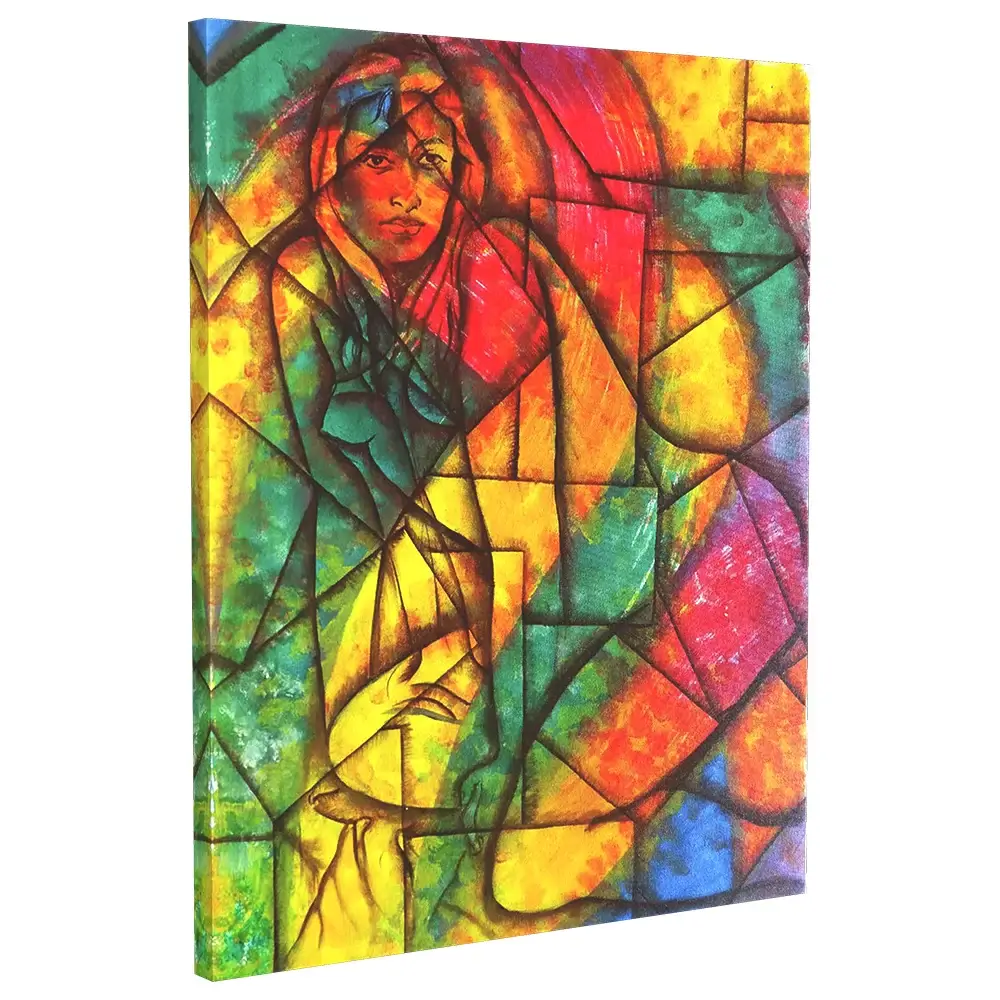
For instance, a single large painting suits a wall with an obvious centre point – above a sofa, a bed, or a console table. As a result, it creates impact instantly, and it needs almost no planning.
A gallery wall, on the other hand, suits large or awkward spaces, such as a staircase or an open-plan living area. For best results, use odd numbers of pieces – 3, 5, or 7 – and keep a consistent 2–3 inch gap between frames. In general, mixing a few sizes looks more natural than a strict grid.
Common Sizing Mistakes to Avoid
- Hanging too high. Typically, most people hang art too close to the ceiling. Keep the centre at eye level, not the top of the frame.
- Buying too small for a big wall. As a result, a small painting on a large, empty wall reads as an afterthought rather than a feature.
- Ignoring the furniture below. Ideally, a painting should relate to what sits beneath it, not float independently in space.
- Ordering without measuring first. In short, always measure your wall and furniture before you choose a painting size – not after.
Custom Sizing for an Exact Fit
Often, standard sizes do not always fit unusual walls, stairwells, or commercial spaces. In that case, a custom-sized original painting solves the problem completely, since the artist paints it to your exact measurements. Learn more about our custom painting process.
Frequently Asked Questions
How do I calculate the right wall art size?
First, measure the width of the furniture below the painting, or the wall itself if there is none. Then choose a painting that covers 60–75% of that width for the best proportion.
How high should I hang a painting?
Overall, hang the centre of the painting at eye level, around 57–60 inches from the floor. Then, above a sofa or headboard, leave 6–8 inches between the furniture and the frame.
Should I choose one large painting or several small ones?
A single large painting works best on a clear focal wall. In contrast, a gallery wall of several smaller pieces suits larger or irregular spaces, such as a staircase or an open-plan room.
Get the Size Right, Then Choose the Art
Measure first, then shop. Once you know your ideal wall art size, choosing a painting becomes far easier – and the result looks intentional, not accidental.